|
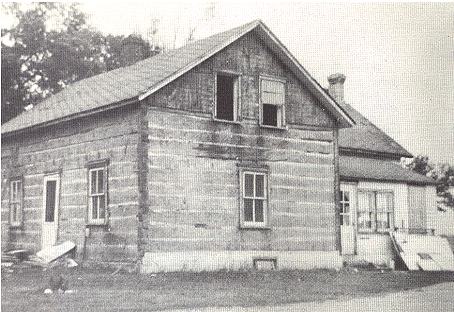
The sturdy log homes the Pioneer
settlers built over a hundred years ago were just as rugged and strong as the
pioneers. The log homes were well built and many lasted over 100 years. A
typical home was the log house that stood on the Joe Kampa homestead
in St. George Township.
The Joe
Kampa Homestead was a Government Patent Deed direct from the United
States of America. The Patent Deed was issued at the General Land Office in
St. Cloud under the signature of Rutherford B. Hayes, President of the United
States. The deed was for an 80-acre tract of land, the East half of the NE
1/4 of Section 28 in St. George Township. The old wagon road, the first trail
through Benton County from Sauk Rapids to the Rum River settlement of Princeton
ran through part of the Kampa land. Joe
Kampa came to America from Germany and was one of the early settlers in
the Duelm area. Many settlers used the old wagon trail from Sauk Rapids as
they travelled East to settle in the Benton County wilderness.
The above photo of the Kampa home
was taken in the year 1961. The log house was being torn down and a new one
built on the farm. The logs that built the Kampa home were not discarded
after being used 90 years. They ended up at Popple Creek and were used to
build a bridge. At the time the house was torn down it was 90 years old
indicating it had been built in 1871. Four generations of the Kampa family
have lived in that home.
The original home, built of
logs, faced the wagon road. The oak logs were hewed on each side and each
log was notched to fit well and lock at the corners. Fourteen children
became members of the Kampa family and the addition of a kitchen was added
on the right side of the home.
The old log house was home for
fifteen children, six girls and nine boys and the parents. It was crowded,
but the sturdy log building was warm and cozy. The home was heated by a
barrel-type iron stove that stood on four legs. Cooking and baking was done
on the cast-iron range with lids on top and an oven for baking. The girls in
the family shared one bedroom and the boys shared another room. There were three
bedrooms on the upper floor and an attic above the kitchen.
More German families
began to settle in St. George Township and the old log church of St. Lawrence
became the center of community life and later the settlement of Duelm was
established. When the railroad went through Benton County, two roads of
travel developed from the Duelm area. One road was half a mile west of
Duelm, going north by the Kampa farm to the St. George Town Hall, and then
turned northwest to the Parent Station on the railroad. The John Marshall
store was in operation and it was a distance of about 4 miles to Parent.
Another new trail through the woods went half a mile east of Duelm, then turned
north on a route by the Hubert Youngman farm, on east of the big slough, by
the Henry Bros. and Kevin Latterell farms to the Foley Bros. settlement on
the railroad. The new roads opened a route of travel for groceries, supplies
and mail, much closer to home then traveling to Sauk Rapids, the County Seat.
For some it was closer to travel to Parent than Foley.
The children of the early
families attended school in District 26. The school house was about half a
mile west of Duelm, on the west side of the road where it turned north and crossed
Stoney Brook. The Kampa children walked three-quarters of a mile to get to
the school.
About the same time the school
was built, the early settlers built a hall on the east side of the road across
from the school. The hall was a meeting place where dances and parties were
held by the neighbors. The hall was used for a long time after that.
When the Kampa children grew up,
few of them remained in the County. Bertha
Kampa married Roy Latterell, a
mechanic and member of the Latterell Bros. Orchestra in Foley. A daughter,
Mary, married Tony
Stimler, who started a blacksmith shop
in Foley and then established the first Ford Auto Agency in Foley and built
the big Ford Garage on the corner
north of the Locker Plant. They were life-long residents of Foley. A daughter,
Anna, married Blase Abfalter and farmed in St. George Township.
Seven of the
boys left home to enter various fields. One was a barber, another was a
buttermaker, one was a sheet metal worker and some went into business and
worked on their own. One son, Louis, took over the farm which is now owned
by his son, Ralph. He will soon turn over the place to his son and the
fourth generation of the Kampa family will own the old government homestead
with the Deed from the President of the United States.
|