
by John H. Stevens
from Minnesota and Its People and Early History of Minneapolis
(Minneapolis, 1890)

 |
 uring all that fatal 18th of August, the people at the Upper Agency pursued their usual
avocations. As night approached, however, an unusual gathering of Indians was observed on the hill
just west of the Agency, and between it and the house of John Other Day. Judge Givens
and Charles Crawford, then acting as interpreters in the absence of Freniere, went out to
them, and sought to learn why they were there in council, but could get no satisfactory reply.
Soon after this, Other Day came to them with the news of the outbreak below, as did also Joseph Leframboise,
a half-breed Sioux. The families there were soon all gathered together in the warehouse and
dwelling of the agent, who resided in the same building, and with the guns they had, prepared
themselves as best they could and awaited the attack, determined to sell their lives as dearly as
possible. There were gathered here sixty-two persons, men, women and children.
Other Day and several other Indians who came to
them told them they would stand by them to the last. These men visited the council outside several
times during the night, but when they were most needed, one only, the noble and heroic Other Day,
remained faithful. All the others disappeared, one after another, during the night.
About 1 or 2 o'clock in the morning, Stewart B. Garvie,
connected with the traders' store known as Myrick's, came to the warehouse and was admitted,
badly wounded, a charge of buckshot having entered his bowels. Garvie was standing in the doorway of
his store when he was fired upon. At about this time Joseph Laframboise went to the store of
Darly & Pratt, and told the two men in charge there, Duncan H. Kennedy and J. D. Boardman,
to flee for their lives. They had not gone ten rods when they saw in the path before them three Indians.
They stepped down from the path, which ran along the edge of a rise in the ground of some feet,
and crouching in the grass, the Indians passed within eight feet of them. Kennedy escaped to
Fort Ridgely, and Boardman went to the warehouse.
uring all that fatal 18th of August, the people at the Upper Agency pursued their usual
avocations. As night approached, however, an unusual gathering of Indians was observed on the hill
just west of the Agency, and between it and the house of John Other Day. Judge Givens
and Charles Crawford, then acting as interpreters in the absence of Freniere, went out to
them, and sought to learn why they were there in council, but could get no satisfactory reply.
Soon after this, Other Day came to them with the news of the outbreak below, as did also Joseph Leframboise,
a half-breed Sioux. The families there were soon all gathered together in the warehouse and
dwelling of the agent, who resided in the same building, and with the guns they had, prepared
themselves as best they could and awaited the attack, determined to sell their lives as dearly as
possible. There were gathered here sixty-two persons, men, women and children.
Other Day and several other Indians who came to
them told them they would stand by them to the last. These men visited the council outside several
times during the night, but when they were most needed, one only, the noble and heroic Other Day,
remained faithful. All the others disappeared, one after another, during the night.
About 1 or 2 o'clock in the morning, Stewart B. Garvie,
connected with the traders' store known as Myrick's, came to the warehouse and was admitted,
badly wounded, a charge of buckshot having entered his bowels. Garvie was standing in the doorway of
his store when he was fired upon. At about this time Joseph Laframboise went to the store of
Darly & Pratt, and told the two men in charge there, Duncan H. Kennedy and J. D. Boardman,
to flee for their lives. They had not gone ten rods when they saw in the path before them three Indians.
They stepped down from the path, which ran along the edge of a rise in the ground of some feet,
and crouching in the grass, the Indians passed within eight feet of them. Kennedy escaped to
Fort Ridgely, and Boardman went to the warehouse.
WONDERFUL EXCAPE OF YOUNG PATOILE. At the store of Wm. H. Forbes, Constans,
book-keeper, a native of France, was killed. At the store of Patoile, Peter Patoile, a
nephew of the proprietor, was shot just outside the store, the ball entering at the back and
coming out near the nipple, passing through his lungs. An Indian came to him after he fell, turned
him over, and saying, "He is dead," left him. The clerks in the store of Louis Roberts had
effected their escape. When the Indians became absorbed in the work of plunder, Patoile crawled
off into the bushes, on the banks of the Yellow Medicine, and secreted himself. Here he remained
all day. After dark, he ascended the bluff out of the Yellow Medicine bottom, and dragged himself
a mile and a half further, to the Minnesota at the mouth of the Yellow Medicine. Wading in the
Minnesota, he entered the house of Louis Labelle, on the opposite side of the ford. It was
deserted. He lay down upon a bed and slept until morning. Joseph Laframbrois, Narces Freniere,
and an Indian, Makacago, found him there and awoke him, telling him there were hostile Indians
about and he must hide. They gave him a blanket to disguise himself, and going with him to a
ravine, concealed him in the grass and left him, promising to return as soon as it was safe to
do so, to bring him food and guide him to the prairie. He lay in this ravine until near night,
when his friends, true to their promise, returned, bringing him some crackers, tripe and onions.
They went with him some distance out on the prairie , and enjoined upon him not to attempt to go
to Fort Ridgely, and giving him the best directions that they could as to the course he should
take, shook hands with him and left him. Their names should be inscribed upon tablets more enduring
than brass.
Over an unknown region without an inhabitant, sleeping
on the prairie and in deserted houses, wounded, without food for days after his scanty supply was
exhausted, young Patoile wandered, traveling some two hundred miles in twelve days, when he came
to some white men who had returned to the homes they had deserted to look after their crops and
cattle. He was in the Sauk Valley, forty miles above St. Cloud. He was taken in a wagon by these men
to St. Cloud. His wounds were dressed, his recovery was rapid and he enlisted in the Minnesota
Mounted Rangers and served in the campaign of 1863 against the Indians.
OTHER DAY, A FULL-BLOODED INDIAN, SAVES A LARGE PARTY. We now return to the warehouse at Little Medicine,
which we left to follow the strange fortunes of young Patoile. Other Day was constantly on the watch
outside, and reported the progress of affairs to those within. Toward daylight the yells of the
savages came distinctly to their ears from the trading-post a half a mile distant. The Indians
were absorbed in the work of plunder. The chances of escape were sadly against the whites, yet
they decided to make the attempt. Other Day knew every foot of the country over which they should
pass, and would be their guide.
The wagons were driven to the door. A bed was
placed in one of them, and Garvie was laid upon it. The women provided a few loaves of bread,
and just as day dawned, they started on their perilous way. How their hearts did beat!
This party consisted of the family of Major Galbraith, wife and three children; Nelson Givens,
wife and wife's mother, and three children; Noah Sinks, wife and two children;
Henry Eschelle, wife and five children; John Fadden, wife and three children;
Mr. German and wife; Frederick Patoile, wife and two children; Mrs. Jane K. Murch,
Miss Mary Charles, Miss Lizzie Sawyer, Miss Mary Daly, Miss Mary Hays,
Mrs. Eleanor Warner, Mrs. John Other Day and one child, Mrs. Haurahan,
N. A. Miller, Edward Cramsie, Z. Hawkins, Oscar Canfil, Mr. Hill, an
artist from St. Paul; J. D. Boardman, Parker Pierce, Dr. J. S. Wakefield,
and several others.
They crossed the Minnesota, and escaped by way of
the Kandiyohi lakes and Glencoe. Garvie died and was buried on the way. Major Galbraith writes:
Led by the noble Other Day, they struck out on the naked prairie, literally placing their lives in the faithful creature's hands, and guided by him and him alone. After intense suffering and privation, they reached Shakopee on the 23rd of August, Other Day never leaving them for an instant; and this Other Day is a pure, full-blooded Indian, and was, not long since, one of the wildest and fiercest of his race. Government gave John Other Day a farm
in Minnesota. He died several years since. His wife was pure white.
Early in the evening of Monday, two civilized Indians,
Chaskada and Tankanxaceye, went to the house of Dr. Williamson, a few miles above the agency,
and warned them of their danger; and two half-breeds, Michael and Gabriel Renfield, and two
Christian Indians, Paul Maxacuta Mani and Simon Anaga Mani, went to the house
of Mr. Riggs, the missionary at Hazelwood, and gave them warning of their danger. There were
at this place at that time, the family of Rev. S. R. Riggs, Mr. H. D. Cunningham
and family, Mr. D. W. Moore and his wife, and Jonas Pettijohn and family.
Mr. Pettijohn and wife were in charge of the government school at Red Iron's village, and were
now at Mr. Riggs'. These friendly Indians went with them to an island in the Minnesota, about
three miles from the mission. Here they remained until Tuesday evening. In the afternoon of
Tuesday, Andrew Hunter, a son-in-law of Dr. Williamson, came to him with the information
that the family of himself and the Doctor were secreted below. The families at the saw-mills had
been informed by the Renfields, and were with the party of Dr. Williamson. At night they
formed a junction and commenced their perilous journey. A thunder-storm effectively obliterated
their tracks, so that the savages could not follow them, and they escaped. On the way they were
joined by three Germans who had escaped from Yellow Medicine, who afterwards left them, with a
young man named Gilligan, and were killed. All the others reached the settlements unharmed.
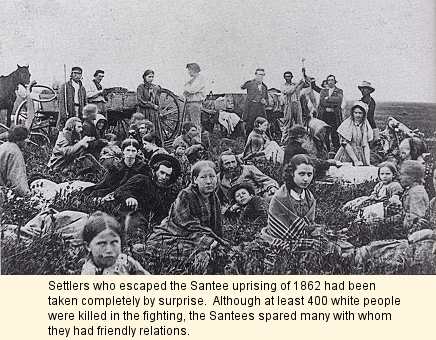 The news of the murders below reached Leopold Wohler,
three miles below Yellow Medicine, on Monday afternoon. Taking his wife, he crossed the Minnesota
river to the house of Major Joseph R. Brown. Major Brown's family consisted
of his wife and nine children; Angus Brown and wife, and Charles Blair, a son-in-law,
his wife and two children. The Major was away from home. Including Wohler and his wife, there
were then at his house, on the evening of the 18th of August, eighteen persons. They started
early on the morning of the 19th to make their escape, with one or two of their neighbors,
Charles Holmes, a single man, being of the party. They were overtaken near Beaver Creek by
Indians, and all of the Browns, Mr. Blair and family, and Mrs. Wohler were captured,
and taken at once to Little Crow's village. Messrs. Wohler and Holmes escaped.
Major Brown's family were of mixed Indian blood. This probably accounts for them saving
the life of Blair, who was a white man. Crow told him to go away, as his young men were going to
kill him; and he escaped, being out five days and nights without food. The sufferings he endured
caused his death soon after.
J. H. Ingalls, a Scotchman, who resided
in the neighborhood, and his wife were killed, and their four children captured. Two of them,
young girls of twelve and fourteen years, were rescued at Camp Release. The two little boys were
taken away by Little Crow, and their fate is shrouded in mystery. A Mr. Frace, residing
near Brown's place, was also killed, and his wife and children captured.
At the town of Leavenworth, on the Cottonwood in
Brown county, the family of Mr. Blum were all, except a small boy, killed while endeavoring
to escape. On Tuesday morning, Philetus Jackson was killed while on the way to town with his
wife and son. Mrs. Jackson and the young man escaped. Mr. Henshaw and Mr. Whiton
were also killed.
Early in the forenoon of Monday, August 18th,
Indians appeared in large numbers at the town of Milford, adjoining New Ulm. The first house
visited was that of Wilson Massipost, a widower. Mr. Massipost had two daughters,
intelligent and accomplished. These the savages brutally murdered. His son, a young man of twenty,
was also killed. Mr. Massipost and a son of eight years escaped. Mr. Mesmer, his
wife, son and daughter were instantly shot. At the house of Agrenatz Hanley all the children
were killed. The parents escaped. Bastian Mey, wife and two children were killed in their
house and three children terribly mutilated who recovered. Adolph Schilling and his daughter
were killed. Two families, those of Mr. Zeller and Mr. Zettle, were completely
annihilated: no one left to tell the tale of their sudden destruction. Mr. Brown, and son, and
daughter, were killed.
The news of the murders below reached Leopold Wohler,
three miles below Yellow Medicine, on Monday afternoon. Taking his wife, he crossed the Minnesota
river to the house of Major Joseph R. Brown. Major Brown's family consisted
of his wife and nine children; Angus Brown and wife, and Charles Blair, a son-in-law,
his wife and two children. The Major was away from home. Including Wohler and his wife, there
were then at his house, on the evening of the 18th of August, eighteen persons. They started
early on the morning of the 19th to make their escape, with one or two of their neighbors,
Charles Holmes, a single man, being of the party. They were overtaken near Beaver Creek by
Indians, and all of the Browns, Mr. Blair and family, and Mrs. Wohler were captured,
and taken at once to Little Crow's village. Messrs. Wohler and Holmes escaped.
Major Brown's family were of mixed Indian blood. This probably accounts for them saving
the life of Blair, who was a white man. Crow told him to go away, as his young men were going to
kill him; and he escaped, being out five days and nights without food. The sufferings he endured
caused his death soon after.
J. H. Ingalls, a Scotchman, who resided
in the neighborhood, and his wife were killed, and their four children captured. Two of them,
young girls of twelve and fourteen years, were rescued at Camp Release. The two little boys were
taken away by Little Crow, and their fate is shrouded in mystery. A Mr. Frace, residing
near Brown's place, was also killed, and his wife and children captured.
At the town of Leavenworth, on the Cottonwood in
Brown county, the family of Mr. Blum were all, except a small boy, killed while endeavoring
to escape. On Tuesday morning, Philetus Jackson was killed while on the way to town with his
wife and son. Mrs. Jackson and the young man escaped. Mr. Henshaw and Mr. Whiton
were also killed.
Early in the forenoon of Monday, August 18th,
Indians appeared in large numbers at the town of Milford, adjoining New Ulm. The first house
visited was that of Wilson Massipost, a widower. Mr. Massipost had two daughters,
intelligent and accomplished. These the savages brutally murdered. His son, a young man of twenty,
was also killed. Mr. Massipost and a son of eight years escaped. Mr. Mesmer, his
wife, son and daughter were instantly shot. At the house of Agrenatz Hanley all the children
were killed. The parents escaped. Bastian Mey, wife and two children were killed in their
house and three children terribly mutilated who recovered. Adolph Schilling and his daughter
were killed. Two families, those of Mr. Zeller and Mr. Zettle, were completely
annihilated: no one left to tell the tale of their sudden destruction. Mr. Brown, and son, and
daughter, were killed.
ONLY A GLIMPSE OF THE SITUATION. Thirty thousand panic-stricken inhabitants at once
deserted their homes, and were destitute of the necessities of life. As the panic-stricken
fugitives poured along the various roads leading to the towns below, on Monday night and Tuesday,
indescribable terror seized the inhabitants; and the rapidly accumulating tide, gathering force
and numbers as it moved across the prairie rolled an overwhelming flood into the towns along the
river. As no wisdom could direct it, no force resist it, so no pen can describe it. It was
gloomy, chaotic, terrific. This record, incomplete, inadequate, seems insignificant, when we
consider that it covers but a small portion of the territory involved, and extends over scarcely
more than two days' time, during which some eight hundred whites were foully murdered, and a large
number of the fairest women and girls of the land, bereft of their kindred and protectors, were
dragged into a loathsome captivity by savages whose crimes would make murder by contrast a mercy.
SOME OF THE RESULTS ACHIEVED. Of the prompt action of the authorites in taking
measures for the protection of the frontier, and of the heroic conduct of those engaged there,
I will not here write. The military history of the Sioux war is now being written by participants.
Some of the results achieved were, the release of all the white captives about the first of October,
1862, to the number of about one hundred, and half-breeds to the number of about one hundred and
fifty, at Camp Release. Our forces also had about two thousand Indian prisoners. A military
commission recommended some three hundred of them for capital punishment, but President Lincoln
allowed only about thirty-eight to be hung.
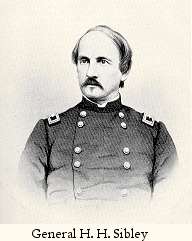 GENERAL SIBLEY'S ACCOUNT OF THE CAPTIVES AT CAMP RELEASE.
DEATH OF LITTLE CROW -- KILLED BY MR. LAMPSON. On Friday evening, July 3rd, 1863,
Mr. Lampson and his son Chauncey, while travelling along the road about six miles north of
Hutchinson, discovered two Indians in a prairie opening in the woods, interspersed with clumps
of bushes and vines and a few scattered poplars, picking berries. These two Indians were
Little Crow and his son Wowinapa.
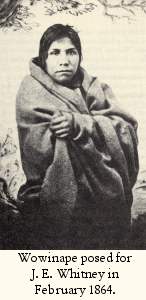 STATEMENT BY THE SON OF LITTLE CROW.
The removal of the Indians from the borders of
Minnesota, and the opening up for settlement of over a million of acres of superior land, was a
prospective benefit to the state of immense value, both in its domestic quiet and its rapid
advancement in material wealth.
|

 ChronologicalBy Relationship
Family StoriesFamily PhotographsOrphan Photographs
MapsContact UsResourcesWhat's New
ChronologicalBy Relationship
Family StoriesFamily PhotographsOrphan Photographs
MapsContact UsResourcesWhat's New