|
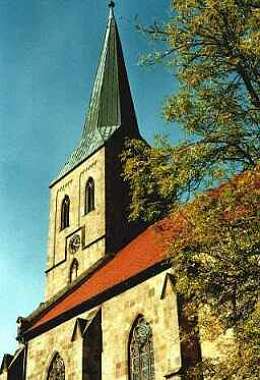 St. Petronilla Church is a work of the important architect
Emil von Manger. Characteristic of its style is strict, very effectively arranged architecture juxtaposed against
the traditional styles of the region. The church belongs to the artistically meaningful examples of historicism in the
cathedral country. Some years ago it was recognized as a historical monument and placed under protection of the state.
Existing in the current church are some historical pieces of equipment of high artistic importance orginating from the
predecessor church. Among some of the items of interest are:
St. Petronilla Church is a work of the important architect
Emil von Manger. Characteristic of its style is strict, very effectively arranged architecture juxtaposed against
the traditional styles of the region. The church belongs to the artistically meaningful examples of historicism in the
cathedral country. Some years ago it was recognized as a historical monument and placed under protection of the state.
Existing in the current church are some historical pieces of equipment of high artistic importance orginating from the
predecessor church. Among some of the items of interest are:
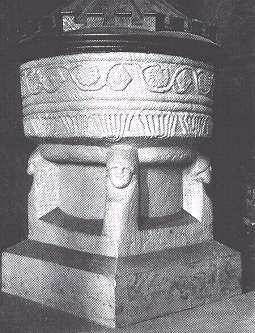
♦Spaetromani baptismal font of the Bentheimer type,
2.Viertel 13th Century
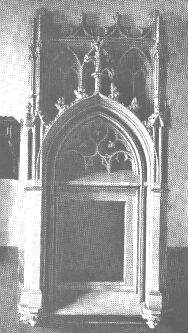
♦Spaetgotiche Sakramentsni (tabernacle)
The church is named after St. Petronilla, a virgin who probably was martyred at Rome at the end of the first
century. A legend regards Petronilla as a real daughter of St. Peter. In the Gnostic apocryphal Acts of St. Peter dating
from the second century, a daughter of St. Peter is mentioned although her name is not given. The legend being widely
propagated by these apocryphal Acts, Petronilla was identified at Rome with this supposed daughter of St. Peter, probably
because of her name and the great antiquity of her tomb. In 757 the coffin containing the mortal remains of the saint was
transferred to an old circular building (an imperial mausoleum dating from the end of the fourth century) near St. Peter's Cathedral in Rome.
This building was altered and became the Chapel of St. Petronilla. The saint subsequently appears as the special patroness
of the treaties concluded between the popes and the Frankish emperors. At the rebuilding of St. Peter's in the sixteenth
century, St. Petronilla's remains were transferred to an altar (still dedicated to her) in the upper end of the right
side-aisle (near the cupola). Her feast falls on May 31st.
Maria Anna Janning was baptised
in St. Petronilla Church in Wetteringen, Germany on October 7, 1820.
Pfarrkirche St. Petronilla
Die neugotische Hallenkirche ist ein Werk des bedeutenden Architekten
Emil von Manger. Kennzeichen seines Stils ist die strenge, an die Stiltraditionen der Region angelehnte sehr
wirkungsvoll gegliederte Architektur. Die Kirche gehört zu den künstlerisch bedeutenden Beispielen des Historismus im
Münsterland. Sie wurde vor einigen Jahren als Baudenkmal unter Denkmalschutz gestellt. Aus der Vorgängerkirche stammen
einige historische Ausstattungsstücke von hohem künstlerischen Wert. Hierzu gehören unter anderem:
♦Spätromanischer Taufstein des Bentheimer Typs,
2.Viertel 13. Jahrhundert
♦Spaetgotiche Sakramentsnische (Tabernakel)
Petronilla war eine der frühchristlichen Märtyrerinnen in Rom. Sie wurde in
der Domitilla-Katakombe beigesetzt und schon im 4. Jahrhundert verehrt. In Legenden des 5./6. Jahrhunderts wird Petronilla
als Tochter des Petrus bezeichnet. Sie war demnach lange krank und wurde von ihrem Vater geheilt. Sie verweigerte die Ehe
und bat Gott um eine dreitägige Frist, da sie lieber sterben als ihrem Keuschheitsgelübde untreu werden wolle, empfing die
Kommunion und starb, wie sie es erbeten hatte, am dritten Tag. Papst Paul I. übertrug um 760 ihre Gebeine in das alte
kaiserliche Mausoleum an der Südseite des Querhauses von Alt-St.-Peter.
In der St. Petronilla Pfarrkirche Wettringen ist Maria Anna Janning am 7. Oktober 1820 getauft worden.
|