 |
 hen I started in Omaha,
it didn't take me too long to put the recapping shop on a profitable basis. Initially, I had a
problem, as the district manager, who was my immediate boss, was a bully. The first week I was
there, I attended a district office meeting for the dealers, and the district sales people. This
boss of mine conducted the meeting and he was very, very abusive to his assistants who were helping
him run the meeting. He was so sarcastic and mean that it was actually embarrassing to sit there
and listen to that sort of thing. I made a resolution right then and there that he was never
going to do that to me. hen I started in Omaha,
it didn't take me too long to put the recapping shop on a profitable basis. Initially, I had a
problem, as the district manager, who was my immediate boss, was a bully. The first week I was
there, I attended a district office meeting for the dealers, and the district sales people. This
boss of mine conducted the meeting and he was very, very abusive to his assistants who were helping
him run the meeting. He was so sarcastic and mean that it was actually embarrassing to sit there
and listen to that sort of thing. I made a resolution right then and there that he was never
going to do that to me.
It wasn't too long after that, I came up with my
first month's operating statement and we had just broken even. A lot of people were around, and
he was very sarcastic and mean about it. He wanted to know why the heck that hot-shot from
Minneapolis wasn't showing a profit. I told him, that if he didn't like it, I could go back to
Minneapolis where they treated people like human beings instead of dogs. It was about an hour
later that he came to the shop and shook my hand and apologized for the rough treatment. I never
had trouble with him after that until the final break about four or five years later when we had
a little dispute. I talked back to him on that occasion and he tried to get me fired, but the
people in management wouldn't let him do it. As a result, not long after that, they transferred
him out to a country store in the sticks. He eventually quite the company which is what they wanted
him to do. They didn't want him around anymore.
From the sound of things in this account, you
might think I was a kind of maverick who didn't get along, but the people who really counted were
the management in Akron, Ohio, and they all knew me and approved of my methods and the things I was
doing. The fact that my shops always made good money didn't hurt at all. However, that was not my
main object. I had certain standards I lived up to and I think they respected me for it.
By the time we moved from Elk Lake to Omaha,
Dorothy had developed a lung infection or something of that nature, and she was really dragged down
in her health. She stopped off in Rochester and had an examination there. They found that there
was nothing seriously wrong. The change of living quarters made a big difference. In Omaha it
was very dry and she recovered her health.
I think it also helped her recovery to be in a
home of our own. We bought our first house in Omaha. I think we paid $3500 for it. It had
one bedroom and we partitioned off a little room for the kids.
It was a nice little spot, high up on a hill, right
next door to the school. So it was handy for Dick to go to
school. I had picked it by myself, which worked out okay. Dorothy was so happy to have a place
of our own, she wasn't too particular. We got a 20 year mortgage, I couldn't imagine doing that
because it seemed like an eternity. When we sold that house 4 or 5 years later we got $7000
for it. Of course, we turned around and paid $9000 for another house. We only lived in that one five
or six months, and then we came back to St. Paul. We sold that one for $12000, without a
real estate agent. That was in 1950. So the sale of the house alone put us nicely ahead financially.
This first house in Omaha was built by the guy who
lived next door. He was an old buzzard who had scrimped all his life for a few dollars, and he
built it himself. He was not a carpenter which was perfectly obvious from the construction. The
roof leaked every time it rained and that sort of thing. Dorothy had really good ideas when it came
to decorating, so we decorated and it felt real cozy and nice. We were proud of it. There was
one bedroom and a room that had been a dinette which we converted into a bedroom for the kids.
The house was on a side hill, and the back half of the basement was above ground. There was a garage
in there for a car. As time went on, I realized that we needed more room and I went to work on
turning the garage into a larger bedroom for the kids. Although I wasn't a very good carpenter,
my work was as good as in the rest of the house.
I had never done any work of that kind at all, so it
was hit and miss. I used my own ideas on how to do things which weren't necessarily the way a
trained carpenter would do them. One of the most difficult problems was that the concrete floor
was all broken up. I took it out and was going to put in new concrete, but I didn't realize what
a terribly hard job it is to spread concrete and get it smooth. Fortunately I had a neighbor
who pitched in and helped me on that, and it turned out fine. Then I was going to finish the
room with the regular old style lath, and plaster it. That was such a terrible job, I couldn't
do it. It took more skill than I had. So I got my neighbor to help me again and we managed to make
a passable job out of it. The woodwork was not that hard for me because I had a little idea of how
that was done. I eventually made a nice little bedroom for the kids. So we had a second bedroom.
Then I converted the upstairs room back into a dinette because our kitchen was very small.
It so happened that my dad
was visiting at the time I was doing all this remodeling. He was retired and living in California
and he came to visit for a short while. It was during hunting season, but Dorothy wouldn't let
me go hunting until I finished that dinette because she didn't like the mess. My dad thought that
was terrible. He was from the old school and thought that you should never let a woman tell you what
to do.
Dorothy and my dad were together all day while I
was at work, and they started playing cards. He was a great card player and Dorothy was a pretty
sharp player, too. I think they played cribbage and they became quite competitive. My dad never
like to lose, particularly to a woman; so as long as he was losing, they had to keep on playing.
But they had kind of a good time together in spite of the fact that he was mad at her for not letting
me go hunting. We did eventually go pheasant hunting several times. My dad had become easier to
get along with as he got older.
I worked on that place a lot, and tried to keep it
fixed up. But I never had much money to spend, so it was all improvised. I fixed up the yard
and got some free sod and tried to make it look nice. My efforts were not too successful, but it
was better than it was before. Joanie was about a year old when we moved there. When she started
walking around, she'd wander down the street. When we tried to call her back, she would run. We
were always afraid she'd run out in the road, so we would have to carefully coax her back, or sometimes
run after her.
I was still so happy that we had a little girl. I
liked little girls, and I liked little kids for that matter. I made such a fuss over her always.
I probably made a fool of myself, I was so fond of her. She would always squeal and laugh and go into
ecstasies when I came home from work. That just made my day. I really loved that little girl.
The second or third Christmas, she received a little
phonograph for Christmas and it had a lot of kids' songs. She had two or three records and she
played those over and over day in and day out and just about drove Dorothy crazy. Joanie loved that
phonograph, but Dorothy was glad when it broke.
When Joanie was 6 or 7 years old and we were
back in St. Paul, she got the notion that she wanted to start a club, so she wrote up a
bunch of postcards to everyone she knew, saying, "If you want to join a club, please pay 5 cents."
That was all she said on the card. Needless to say, she didn't get any money. Dorothy and I got
a kick out of that. At this same period, Joan had little friends from the neighborhood who came
to the house, and we had a lot of fun with them. They always like to ride in the back of my
truck.
In later years, when Joan was a pre-teen, her friends
still enjoyed coming over to our house. They were great fans of the Mickey Mouse Club, and they
would send in for various costumes and things. Annette Funicello was the star, and they all
tried to imitate her. They had a lot of fun with that. The main thing the kids got were hats with
mouse ears they liked to wear. They did a lot of dances on the show and these girls would try to do
the dances. This turned out to be quite a performance. Joanie was kind of the leader; she was the
most adept. I took some films of them dancing, which I still have, and they are really fun to watch.
Joan later took ballet lessons. She liked that and we have some movies of her dancing.
I regret not spending more time with my kids when
they were growing up. I love my kids and did everything I could for them, but I was so involved
with my work that I didn't spend as much time with them as I would have liked. I felt close to
them, but I didn't do many things with them, other than things like going to the circus or the fair.
I had more activity with Dick than with Joan. Dick
was involved with my hunting trips. I used to take him out when we lived in Omaha. The first few
times, I think he was about 9 years old. I'd take him with me and he'd carry his B-B gun.
We had some nice trips on Saturdays and weekends. I saw a pheasant standing once and got him to shoot
it with my gun. We had a good time.
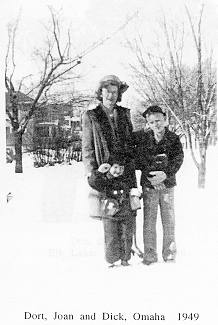 One of the things Dorothy and I did together was
working with the cub scouts. Dick started going and he liked it, so Dorothy became a den mother
and they eventually made me cub master. Dick was 7 years old at the time. We worked with
them for a couple of years. They said I did a good job, but I think really they were afraid that they
would have to do it themselves. The chief function of a cub master was to train the den mothers.
I'd take the den mothers to a monthly meeting and we'd get the programs lined up for the month.
They had various projects everyone worked on. I recall putting on a little fair at the school
gym which had the theme of the Knights of the Round Table. The kids all made swords and shields
and things that were associated with that time period. So we had a big display and I was in charge
of handling that event. I don't recall much about it but we have some pictures of the kids in their
costumes and shields and so forth.
One of the things Dorothy and I did together was
working with the cub scouts. Dick started going and he liked it, so Dorothy became a den mother
and they eventually made me cub master. Dick was 7 years old at the time. We worked with
them for a couple of years. They said I did a good job, but I think really they were afraid that they
would have to do it themselves. The chief function of a cub master was to train the den mothers.
I'd take the den mothers to a monthly meeting and we'd get the programs lined up for the month.
They had various projects everyone worked on. I recall putting on a little fair at the school
gym which had the theme of the Knights of the Round Table. The kids all made swords and shields
and things that were associated with that time period. So we had a big display and I was in charge
of handling that event. I don't recall much about it but we have some pictures of the kids in their
costumes and shields and so forth.
Dick got involved in a cub scout project where he
learned to play chess. So he became an expert at that at an early age. He was about 9 years
old at the time. Dick also became interested in radio and built a crystal set. That was as
fascinating for me as it was for him. I helped him with that. Eventually that same interest
evolved into his being a ham radio operator. He was good at it. They used to go on field trips
and take their radios on their backs and set them up in different places.
When he was 12 and 13 years old, and we were
living in St. Paul, grown-ups would come to the door and want to see Dick. They'd go up in
his radio shack on the upper floor and go on the air with him. He had many adult friends that he
made that way, through ham radio. There was an enthusiasm and interest there that transcended
age. That was how he first got interested in what later became his profession. He ended up being
associated with radio.
Some years later, Dick and I went on a hunting
trip up in the bush north of Winnipeg. We were traveling through this little tiny town and Dick all
of a sudden said, "I know that guy!" and he pointed towards a house with an antenna. So Dick
went in to see the man. They went on the air and had a ham session while I waited in the car.
That was quite an amazing thing -- to see somebody you knew in the middle of nowhere.
Dick went to Como High School in St. Paul and
attended the scout programs there. Once the county sheriff was conducting the program, and a good
friend of Dick's was going to play taps. He was offstage and he blew the trumpet and all they
could hear was him blowing with no sound coming out. That was a funny incident. He was very
active in the scouts and became an Eagle scout. He's always been a very industrious, determined
person, and when he sets out to do something, he does it right.
Dorothy didn't want the kids to have dogs or pets
because she didn't want to have to clean up after them. She was always a neat housekeeper. But
one time Dick was hanging out at a friend's house after school and they had some puppies. They
gave him one and he brought it home. Dorothy was going to make him take it back, but she finally
relented and let him keep it on the condition that he and Joanie would take care of it and clean
up after it. Of course, she ended up doing the work. As it turned out, she was as much in love
with the dog as anybody. In those days you didn't confine dogs on a leash as you do now. So the
dog was running with the kids one day and he got out in the road and got hit by a car. Joanie
was only 3 or 4 years old at the time. For years afterwards, she'd cry about that dog whenever
she felt blue.
Before that, in Eau Claire, we got a couple of little
chicks for the kids at Easter time. We had them around for the longest time and they got to be
big chickens. Dorothy called them Hank and Meatball. One of them disappeared mysteriously. The
other one was still hanging around, and that crazy chicken used to follow Dorothy around and squawk
and want attention. Eventually that chicken disappeared also. It could have been some animal that
got it, or maybe the people next door. Those were the people I mentioned earlier who were unemployed
hillbilly types -- they may have decided our chickens would make a good dinner.
The folks who lived next door to us in Omaha
kept welfare children, and they were very sloppy, dirty people. I still can't figure out why
the welfare would have allowed them to take these children. They were mostly little babies. They
had one little girl who was probably ten months old at the time we moved there. She would be
playing outside and whenever she saw Dorothy, she'd take a handful of dirt and put it in her mouth.
Of course, Dorothy would go into fits over that, but this little girl just loved to antagonize her.
I think she did it just out of deviltry. Dorothy would get very upset, but she was a little rascal.
In those days it was quite traditional to have coffee
of an evening, or sometimes sandwiches and coffee. So these people would call us over, and we
didn't want to go, because they were so dirty. On the other hand, we didn't want to refuse and be
impolite. So we'd go over around 9:00 p.m. or 10:00 p.m. and sit around and talk. They
were interesting people in a way. The man, Rol Croft, made the sandwiches. His wife was
kind of lazy, so he did the work. He had an itch all the time and he was always scratching himself.
Of course, that didn't sit well as far as appetite was concerned. They were pleasant people to
talk to. They were very open and talked about things most people would never mention. He used
to go hunting with me. We had kind of a good time with them. They had a daughter at the time who
was getting married. I still had that ping pong table that Vern and I had made in Minneapolis. We
set it up out in the driveway in the back, and this neighbor girl and I played ping pong. We
had a lot of fun.
We used to socialize with Charlie and Goldie Hudgins.
The Hudgins were our religious friends. We played card games with them, and Charlie and I
went hunting together once in awhile. Dorothy met them when she started going to the Baptist
church, and they became good friends. She started Dick in Sunday school there. So Dick was
baptized a Baptist. I felt it was necessary to have some Christian education because that's actually
the foundation of a good character. I think that's actually what's lacking in modern society
these days. They've dropped Christian teachings. I went once in awhile with them, but probably in a
condescending way. I was still of the opinion at that time that the only real religion was the
Catholic religion.
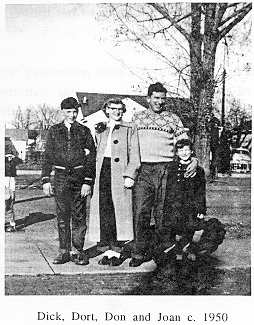
The Crofts, who lived next door, were very
interested in hockey. At that time, Omaha was a great hockey town. They had a farm team of the
Detroit Red Wings called the Omaha Knights, and we used to go to hockey games pretty regularly.
Dorothy liked hockey, and we had a lot of fun watching the games. Then we had a bad experience
with a baby sitter. The kids told us about some things that she did, so we weren't too sure about
her. After that, when we went out for the evening, we left Dick, who was about 9 years old
to look after Joanie. We had more confidence in them than we did in the babysitter.
We were in Omaha about five years. One of the things
I recall is that it was terribly hot in the summertime. This was before air-conditioning, and we
were fortunate that our house was on the highest hill in the area. We could open the windows and
get a good breeze. At night it would cool off. When I was at work I'd have hot molds to content
with. Sometimes the temperature in the shop would be 110 degrees or more. The shop was in
the downtown area at 20th and Harney. We lived at 42nd and Charles so it was a little over 20 blocks.
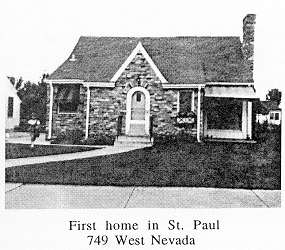
We left Omaha to go to St. Paul in 1951. When
we moved, Dorothy was very happy to get back to a place where she felt at home. I went first and
picked out the house with the advice of some people at work who knew the area. It was a nice house
on Nevada Avenue and Dorothy was very pleased with it. Again, it was just a little bit cramped
for us. We ended up getting her father, who was unemployed at the time, to finish off a room in
the attic so that Dick could have a room to himself.
|

