 |
 y first promotion with
Firestone came in about 1942 when they set up a new retread shop in Eau Claire, Wisconsin. I was
sent down there to set it up, and that was quite a challenge for a 29 year old guy. Although I
did have quite a bit of experience, having helped my brother set up his shop in Milwaukee, and
when Firestone moved from Minneapolis to St. Paul, I had experience setting up that shop. Still,
it was a tough job and a challenge. y first promotion with
Firestone came in about 1942 when they set up a new retread shop in Eau Claire, Wisconsin. I was
sent down there to set it up, and that was quite a challenge for a 29 year old guy. Although I
did have quite a bit of experience, having helped my brother set up his shop in Milwaukee, and
when Firestone moved from Minneapolis to St. Paul, I had experience setting up that shop. Still,
it was a tough job and a challenge.
The manager of the Firestone Store in Eau Claire
was Don Gabbert, who later started Gabbert's furniture company in Minneapolis. He was a
pretty sharp fellow even then. You could tell that he had the potential of doing something big.
I first met him when I was at 5th and Exchange in St. Paul. He came there as a trainee just
out of college. He worked in the store, so I knew Don fairly well. In Eau Claire I worked with
him for quite awhile.
My work in Eau Claire was quite satisfying since I
soon ran the most profitable shop in the country. It had quite a reputation. There were many
reasons for that. One was that it was a brand new shop, and we had few failures which was a
result of excellent workmanship. We had a profit of about 40 percent on sales. In those
days, that was a lot of money. Our monthly sales were about $9000. It was a good deal, and I
got a reputation as the fair-haired boy. Even at the end of the war, when new tires became
available, and our volume dropped right down to about $2500 or less, we still were able to show
a profit. We sold a recap to a dealer for about $4. So it took a lot of recaps to make $2500.
One of the things that helped us get settled when
we moved to Eau Claire was the Newcomer's Club. We got acquainted with a lot of nice people through
that organization and some are still our friends today. We played bridge at different people's
houses. One couple who are still friends are Lyle and Gail Johnson. He was a service man
for Burroughs Adding Machine Company. Another family we associated with were Jim and Winnie Curtis.
I'm still in touch with them once in awhile. He worked for me, and I liked Jim all right. Winnie
was kind of a busybody type of person, and Dorothy didn't really care for her all that much. They
were very aggressive in trying to cultivate our company. We resisted, but they always sought us
out. They were strange, different people.
One New Year's Eve Jim and Winnie decided to
come out and visit us. I think both Dorothy and Winnie were pregnant at the time. Jim and I
thought it would be a good idea to go downtown to get a bottle of liquor to bring in the New Year.
The Philips Company owned half of Eau Claire, so went to a Philips liquor store. By chance one
of the family members, the owner, was there. In honor of the holiday he gave us each a big drink
before we left, so we were pretty well sailing. We couldn't get over the fact that old Philips
popped for a drink. That was something that was unheard of. On the way back we had to cross the
Chippewa River and we hit a patch of ice and the car went into a tailspin. We came very near
dumping into the river -- but we didn't.
When we first came to Eau Claire we lived in a nice
house that had been a nursery at one time, so we raised a victory garden there and it was very lush.
We grew wonderful vegetables.
Dickie got into a little trouble when we lived
there. He was 7 years old at the time. There was a gravel pit close by, and he had been
warned to stay away from it. I was scared to death because it was a sheer wall and kids were
always playing around there. I had to really scold him to keep him away from it. Finally, he
went there one day with a friend of his and I had to punish him. I didn't like doing that, but
I was so fearful that something would happen to him if he went there again.
I remember Dorothy told me about another incident
that happened while I was at work. Dick was four or five years old at that time. There was a
neighbor who had a dog that was always getting in our yard. So this dog came into the yard, and
Dick was out there. Dorothy heard him say, "I'm going to kick you in the ass, you damn dog!"
Then he kicked and he missed the dog and fell over backwards. That was something we laughed about
for awhile.
When Dick was about 6 years old, we allowed him
to go downtown with some older boys. To do that, they had to cross the Chippewa River. On the
way back, these boys lifted Dick up over the edge of the bridge and held him by the heels upside down,
which was of course very alarming. They were trying to scare him. They certainly gave me
nightmares afterwards. I had bad dreams about that for a long time. I can't understand how we
were so lax as to let him go with them. But I guess we just thought they were good kids.
It seems like through our married life we were
plagued with old people who were disgruntled with life. There was an old couple next door who were
always giving us a hard time. She was the worst one. She was such a domineering person that when
they were out watering the lawn, her husband would hold the hose while she directed the squirting.
We used to laugh about that.
Down on the corner lived another couple who were
very common. They were dirty people who would throw their garbage right out the back door. That
was the darndest mess you ever saw, and very disagreeable.
We had our good times and our bad during the
early days. When we moved to Eau Claire Dorothy was homesick for St. Paul. She'd never
lived away from home before. And I concentrated so hard on my work, I don't think I was as good
a husband as I could have been during that time.
We had times that were very memorable. Mostly they
were a mix of different emotions. One of those times was just at the end of the war. As I said,
Firestone had secured an exception for me from the draft so I didn't have to go into service, but, in
1945, as the war was winding down, I received a draft notice. I was supposed to report in April.
Dorothy was pregnant with Joanie and we knew that the baby was due to be born in May. I felt very
concerned about her being left with the baby with me being gone. So I made an appeal to the draft
board, and asked if they would let me stay home until after the baby was born. They consented to
that.
Another problem arose in that our landlord decided he
wanted our house for himself, so we were evicted. I had been trying and trying to find a place to
rent in Eau Claire, but couldn't find a thing. I even tried to put an ad in the paper offering a
reward for a house, and the paper wouldn't take it. They said it was unfair to those who couldn't
afford to place an ad. I finally decided when I got the draft notice that Dorothy would be
better off near her folks, so I cashed in my war bonds to make the down payment on a house in
St. Paul.
While Dorothy was in the hospital with the baby,
I went to see her and she was very excited because she had heard on the radio that anybody who
was 30 years old or older didn't have to report because the war was essentially over. I wasn't
too sure about that. In those days you heard so many rumors, you didn't know what was true and what
wasn't. So I told her, "Well, I'm all ready to go, so I'm going." And she cried. That was something
I never could stand, tears. I promised her I would do my best to get out of it. And I did. I
called the draft board. They said they hadn't received anything official on it, but that it would
probably be just as well if I stayed home. That was happy news.
The sad news was that after the baby was born, we
still didn't have a place to live. I was living in a rooming house while Dorothy was in the
hospital. When she came out of the hospital, we rented a motel room because there wasn't any
other place to go.
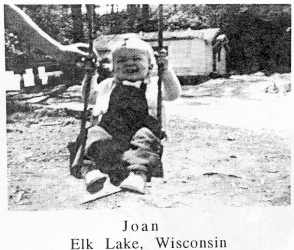
For some reason, that whole experience was a
memorable one. It was full of both happiness and anxiety. We were probably as much in love then
as we ever have been, and we were totally delighted with our beautiful little girl. Fortunately
we had some money because we had gotten our deposit back from the house we were going to buy in
St. Paul. Those people were extremely nice and let us get out of that deal.
I finally rented a place out on Elk Lake about five
miles out of town. It was an old cottage that had been used as a roadhouse and had been very sloppily
managed. It was on a river bank, and instead of hauling stuff to a dump, the former tenants had dumped
stuff right on the river bank near the house. So there were rats all over the place. When they
remodeled it from a roadhouse back into living quarters, they had painted right over dirt. There
were big gobs of dirt under the paint. It was a real sloppy, dirty place, but it was the only
thing we could find. It was right next to an old dam that had been used as a power dam at one
time. Water flowed over the top of this dam into the creek making a spray, so the air was damp
all the time. That made for very bad living conditions. Dorothy developed a lung problem from
it. It didn't seem to bother the baby, but it was a good thing we got out of there eventually.
These rats were so terrible, I put out poison for them.
There were so many of them, they just overran the place. We'd come home at night and find a
rat running around in the kitchen. I'd get so mad that I'd get a broom and get the broom on the
rat and hit it in the head with a hammer. It just made me so mad seeing the things. I really
hated them. And, of course, it was even worse for Dorothy because she was there more of the time.
The people who lived next door were people from
the sticks someplace down south. They were real country people. They had come up to work at the
U.S. Rubber Company which had a big plant there. This lady apparently didn't do any housework.
Every morning, she'd come over, knock on the door and visit Dorothy. Dorothy would get so
frustrated because she couldn't get any work done. Often she'd still be there when I got home at
6:00 p.m. Dorothy wasn't the type of person to tell her off or tell her to go home, but she
got so frustrated and so nervous. Many times she'd just cry about it because she didn't know what
to do. They were primitive people. At the time they lived there, the husband was out of work.
I think they had closed the rubber plant. So they were scrounging for food. They'd get snapping
turtles out of the lake and eat them, and they fished all the time. The fish in there were rough
fish, not really good eating. But they did that sort of thing. They had a cute little girl.
she was probably 3 or 4 years old at the time, and she had a fish that she dressed up in
baby clothes. That was her baby and she'd run around with that crazy fish, all dressed-up, playing
with it.
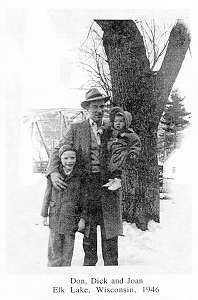
We had a lot of company from the Twin Cities, particularly
when we lived at Elk Lake because it wasn't too far from the cities.
Dorothy's brother Bill came to live with us for awhile.
He was stationed at Pensacola, Florida, and he had been involved in a very bad auto accident. I
don't remember the details, but he needed money to come home on and for something else. I know
we sent him quite a bit of money. That was right after we had gotten our deposit back from the
house we were going to buy in St. Paul so we had a little money.
Bill had just broken off his engagement to this
gal who I mentioned before. He got the ring back, and decided he wanted to sell the ring. I
thought that would be a nice present for Dorothy. Her original engagement ring was so small you
almost needed a magnifying glass to see it. The ring Bill had was very nice, so I took the ring
for what Bill owed me at the time, and I gave it to Dorothy.
One of my greatest delights at that time was Joanie.
I was so thrilled to have a little girl. When she was 6 or 7 months old, I'd come home from
work and she'd squeal and laugh and wave her arms around, and I'd just about flip. I was always
so fond of her.
Dick started
school in Eau Claire, and later when we moved out to Elk Lake he went to an eight grade country school.
That was very primative. I recall they used to hold church services at school and we took Dick to
the church service and dropped him off. It was about a mile away. Pretty soon he came back.
We knew that he had just walked out of the service. Of course, we should have gone in with him
but we didn't do it. I guess there was a fellow there who was singing a very mournful song and
Dick didn't like it, so he walked out. We made him go back, but I felt bad afterwards. We
shouldn't have made him do that.
We lived quite a rural existence in Eau Claire.
Whenever we wanted a chicken, there was a farm nearby and we would go over there and buy one from
those folks. Naturally they would sell the roosters for eating. They took a 22 rifle and shot
the roosters in the head, at close range. Then they butchered them. I was used to handling things
like that from when I was a kid, so there was no problem. I would take the chicken home and clean
it. Those chickens tasted awfully good.
Probably the best thing about that time period was
that my work was going so well. I was working hard and seeing positive results. One of the
things that gained me a lot of respect in the company was the fact that I refused to recap tires
that I didn't think were recappable. The local store was sending me a lot of tires that I sent right
back to them. I refused to recap them. The manager ended up sending them to a shyster in St. Paul
who would plug up the holes and cover the defects, and they looked beautiful, but they didn't hold
up. That was a common practice then. I suppose I was regarded as a rebel. I wouldn't go along
with it. I thought it was wasting good material and that it should go for the war effort.
The district office people came around and wondered
why the store was sending tires to the St. Paul dealer instead of to my shop. They naturally
told them why and the district people put pressure on me to accept them, but I refused. I very
indignantly wrote a letter to my boss in Minneapolis at the district office and explained why I
was refusing, and more or less told them that under no circumstances would I recap those tires.
I think he admired me and respected me for that. He never did answer my letter or say anything
about it. However, six months later, I was given a promotion to go to a big shop in Omaha. This
was a place that had been run through the war, and they had a tremendous volume, but they never
made any money. In fact, they lost money every month. So when I came there, it was a challenge.
|

