 |
 e moved from 28th Avenue when Firestone
moved the retread shop from Minneapolis to St. Paul. I went from the shop at 11th and Harmon in Minneapolis to the
one at 5th and Exchange in St. Paul. This was a big boost for us as I received a raise in pay and I didn't have to work
nights, which was just like heaven for me. I hated the night work, and Dorothy did, too, as I said before. e moved from 28th Avenue when Firestone
moved the retread shop from Minneapolis to St. Paul. I went from the shop at 11th and Harmon in Minneapolis to the
one at 5th and Exchange in St. Paul. This was a big boost for us as I received a raise in pay and I didn't have to work
nights, which was just like heaven for me. I hated the night work, and Dorothy did, too, as I said before.
Our new home was on the east side of St. Paul. It was a beautiful
little house, and that was nice for us, because we'd lived in shoddy places for so long. I think rent was $35 a month.
One of the memorable events shortly after we moved was the November 11,
1940, Armistice Day snow storm. The day started out sunny and bright, but about 10:00 a.m. the clouds stated to roll
in. By noon it started to rain, and by 2:00 p.m. there was a blinding snowstorm. We lived quite close to work at
the time, so I had no trouble getting home. But not one of the rest of the crew at the shop got home from work. They would
get part way home and not be able to go further and duck into a filling station or a church or school to spend the night.
I was the only one who got to work the following day and that was only because
I had my Model A Ford which was a good car to drive in the snow. It was high and would ride over the top of the snow.
So we could get around all right. The day after the snowstorm we started to worry about Dorothy's folks, fearing that they
were out of fuel oil. At the time, they were heating the house with an oil stove and they would only get five gallons of
fuel at a time. So we were concerned and took a trip out there. Fortunately the roads were plowed, but only one lane, and it
was rough going. We made it out and back with no problem. We found everybody was warm and cosy out on Centerville Road
where her folks lived. So we got through that okay.
We were closer to our friends when we lived in St. Paul than we had been
in Minneapolis. Some friends would come over now and then to play cards or socialize. Our cousins Joe
and Red Stimler lived in St. Paul and they would come to visit. Some Swedish people who were friends of Dorothy's from
when she was working lived on a farm over in Wisconsin. They had us over there for a few weekends. I relished the farm
food. That was great, as I recall. They had apple trees. We'd come home loaded with apples.
Then one payday we went to the grocery store and I lost my billfold with my
whole paycheck. That was a real crisis and a real tragedy. We still had no savings, and credit cards didn't exist then. We
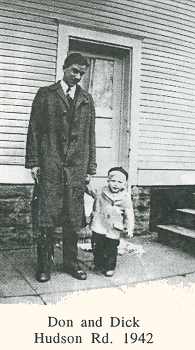
decided we just had to find a place that was cheaper to live after that. So we found a place over on Hudson Road in
St. Paul. That was $28 with heat. That made the difference, and put us in the black. From then on, we seemed to
prosper. We got ahead financially. Before it was always a struggle.
It was while we were on Hudson Road that the Japanese attacked Pearl Harbor,
December 7th, 1941, and the war started. The first thing that entered my mind was the fact that our rubber came from
Indonesia and that it would cut off our rubber supply. Of course, we were using natural rubber at the time. Synthetic rubber
had been invented but it wasn't in popular use before the war. We had to stop recapping tires right away. We spent our
time fixing up a lot of old junk, actually. We'd take old tires with holes in them and patch them up, and sell them for what
we could get out of them. They were good enough to get anybody a few miles, but they were pretty sad. After a short time,
the synthetic rubber came into use. It was a very poor quality, mixed about 50 percent with ground up natural reclaimed
rubber. People were lucky to get 5000 miles out of a set of tires made with it. And if you went over 30 miles an hour,
the rubber would fly off because it was such poor quality and poor adhesion. Eventually, we got in some better material.
In the meantime, at the very start of the war, Firestone had a big warehouse full of recapable tires and proceeded to sell them to a
private party because they felt that the government would be confiscating them, and they wouldn't get any credit for it.
So they sold them quickly. Maybe their fears were well founded because rationing came in shortly afterwards. Then every tire
was accounted for and it was unlawful to sell a tire without receiving a ration stamp, even a used tire. So that made it more
difficult.
Firestone had secured an exception for me from the draft so I didn't have to
go into service. They had priority because we were in an essential industry. Actually, I kind of wanted to go into service,
but I felt that I owed it to my family to stay home.
Many things were rationed during the war and that was difficult. At that time
I had a Model A Ford and I'd get some kerosene and put it in the tank to stretch out the gas. Actually, there was a lot
of cheating going on which always bothered me, but we did it like everyone else. We got ration stamps that we shouldn't have
had. Later, when we moved to Eau Claire, they had a gas station in conjunction with the Firestone store and they insisted that
I could have all the gas I wanted. That was another thing I thought was wrong, but I did it anyhow. I was just as bad as
anybody else.
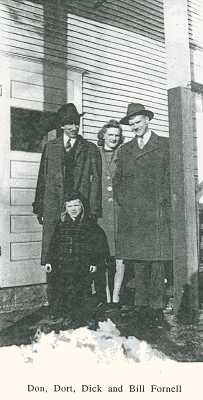
Dorothy's brother Bill came to live with us on Hudson Road. He had an
argument with his dad. I don't know whether his dad kicked him out or he just left, but he came to live with us until he
went into the Marines.
At the time Bill was living with us, he got involved in a romance with a
neighborhood girl. This was the greatest story of frustrated true love that I've ever witnessed. He was very much in love
with this gal, and he went into service and they corresponded constantly, and every time he'd come back they would be
together all the time. It was true love as far as I could see. But the thing that was sad was that she was Catholic and
he wasn't and her folks objected to that. She finally told him she couldn't see him anymore because of that. He was pretty
broken up over it.
We had a going away party for Dorothy's brother Lee when he went into the service.
I worked with some Italian gals and they came over and cooked an Italian dinner for us with spagetti and meatballs. That
was my favorite dish. We drank beer and I think we danced, and had a good party.
Occasionally we had a family outing. I remember going to Stillwater and
being on the beach. I think I remember it because a fellow came along and wanted to know why the hell I wasn't in service.
Most of the young men were all overseas at that time.
Dick was two or three years old then, and he constantly had bad colds
every winter. That was the time I mentioned earlier when I took him to the doctor and the doctor recommended that we both
have our tonsils out. So Dick had his out, and I recall it wasn't exactly the same day, but I had mine out, too.
When I got home I had a hemorrhage from the throat, and the doctor came and gave me a shot of snake venom to stop the
bleeding. That's what they used to clot the blood. It worked right away.
I remember when Dick got back from his tonsillectomy, I had bought a present
for him. It was a tricycle and he started riding round and round the table, bumping into all the furniture.
He was a rascal when it came to eating. Dorothy became frustrated because
she couldn't get him to eat properly. He just wanted to drink milk. I'd come home from work and we'd sit at the table and she'd
scold me because I wasn't scolding him. She got tired of trying to discipline him all the time, so it was up to me, but
I was not much of a disciplinarian. I was too soft-hearted.
When I lost my billfold, we always thought maybe Dick had flushed it down the
toilet. At least that was one of the possiblities as it was such a mysterious disappearance.
One other significant event when we lived in St. Paul comes to mind.
A Catholic priest came to visit us one day when I was not home. I think my aunt, who was a good Catholic, had sent him
over to try to get us to go to church. The priest ended up giving Dorothy a lecture saying that she was causing me to
live in sin because I wasn't observing the Catholic religion anymore. Of course, all he did was antagonize her, and if
she had any notions of joining the church, she never would after that.
|

