ALTWIESLOCH
 |
 he name "Altwiesloch" (in German literally "old pointing hole") emerged in 1400 for the first time and referred
 at that time to the castle with associated property yard. In 1288 Weisloch and Altweisloch were already differentiated from
each other with respect to the city and the castle. And a further Schoenauer document speaks in 1293 of a
"Castrum" (Altwiesloch) and "oppodium" (Wiesloch city). With the transition to bathing in 1803 the affiliation to
Weisloch was completely waived, although it was manufactured again in 1810 provisionally. In 1842 Altweisloch separated
from Weisloch and became an independent municipality. Due to the building of the large welfare institute
for care in 1905, the village was included in common with Weisloch after 1908.
In earlier time mills were so frequent in Weisloch that it was called
Muehlbach (literally "glue brook"). The earliest documented mention of a mill occured in 801; in 1786 there
were nine. From east to west lay among other things the Lechner's Mill, the Upper Mill, the Lower City Mill, the Post
Office Mill and the Thorn Mill. This past industry is referred to by the Lechner's Mill situated between the Altweisloch
and Weisloch residential areas.Wiesloch had already received town rights in 965 and city rights in the
early 13th century. Around 1230 the city became a possession of the Wittelsbach family, as Princes of the Pfalz
(Palatinate). For the next centuries different branches of this dynasty ruled the city.
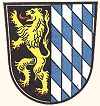
The oldest seal dates from the early 14th century and shows only a
shield with the lion of the Pfalz. In the 15th century the diamonds of the Wittelsbach family were added. These arms
were identical to the present arms, which were officially granted in 1898. From 1842-1866 in its seals the city used
only a capital letter S, but not in its arms.
at that time to the castle with associated property yard. In 1288 Weisloch and Altweisloch were already differentiated from
each other with respect to the city and the castle. And a further Schoenauer document speaks in 1293 of a
"Castrum" (Altwiesloch) and "oppodium" (Wiesloch city). With the transition to bathing in 1803 the affiliation to
Weisloch was completely waived, although it was manufactured again in 1810 provisionally. In 1842 Altweisloch separated
from Weisloch and became an independent municipality. Due to the building of the large welfare institute
for care in 1905, the village was included in common with Weisloch after 1908.
In earlier time mills were so frequent in Weisloch that it was called
Muehlbach (literally "glue brook"). The earliest documented mention of a mill occured in 801; in 1786 there
were nine. From east to west lay among other things the Lechner's Mill, the Upper Mill, the Lower City Mill, the Post
Office Mill and the Thorn Mill. This past industry is referred to by the Lechner's Mill situated between the Altweisloch
and Weisloch residential areas.Wiesloch had already received town rights in 965 and city rights in the
early 13th century. Around 1230 the city became a possession of the Wittelsbach family, as Princes of the Pfalz
(Palatinate). For the next centuries different branches of this dynasty ruled the city.
The oldest seal dates from the early 14th century and shows only a
shield with the lion of the Pfalz. In the 15th century the diamonds of the Wittelsbach family were added. These arms
were identical to the present arms, which were officially granted in 1898. From 1842-1866 in its seals the city used
only a capital letter S, but not in its arms.
|


Last modified: April 15, 2002
Copyright © 1998-2002 Holy Mountain Trading Company. All rights reserved.
Stimmler/Stimler-Kampa Family Album
BIOGRAPHIES
Alphabetical
ChronologicalBy Relationship
Family Histories
Family StoriesFamily PhotographsOrphan Photographs
Family Reunion
MapsContact UsResourcesWhat's New