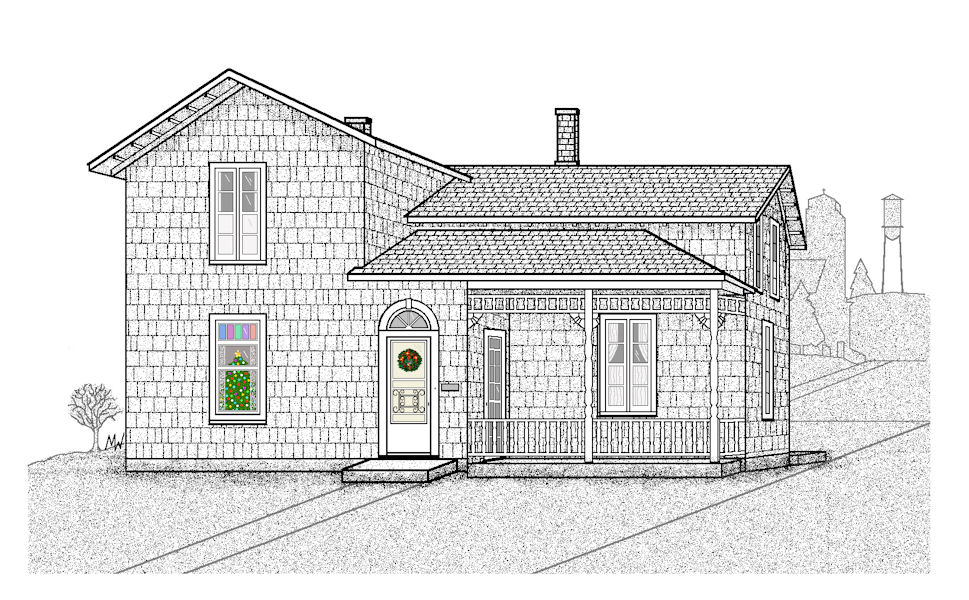
Mullally home 1939-1978
316 Second Ave. South, Sauk Rapids, Minnesota
for:
| Mom & Dad | ||||||||||
| Jim | ||||||||||
| Bob | ||||||||||
| Leo | ||||||||||
| Ann | ||||||||||
| John | ||||||||||
| George | ||||||||||
| Mary | ||||||||||
| Ralph | ||||||||||
| Ruth | ||||||||||
| Roy |
& many, many more!
| Mom & Dad | ||||||||||
| Jim | ||||||||||
| Bob | ||||||||||
| Leo | ||||||||||
| Ann | ||||||||||
| John | ||||||||||
| George | ||||||||||
| Mary | ||||||||||
| Ralph | ||||||||||
| Ruth | ||||||||||
| Roy |
|
Hi !  I've written down some things I remember about our Mullally family, and living at 316 2nd Ave. So., Sauk Rapids, Minnesota, (tel: 2587-J). Mom and Dad bought
that house and four lots, for about five thousand dollars, in 1939 or 40. I was born on Oct. 10, 1940, in the big bedroom downstairs. Ralph was born there, too, in Feb., 1943.
I know, because I was there. I remember!
Some of you may not agree with everything I say here, but I tell it only from my own perspective. From where I stood at the time, this is all really true, and it all really happened. That's the way it was! I've written down some things I remember about our Mullally family, and living at 316 2nd Ave. So., Sauk Rapids, Minnesota, (tel: 2587-J). Mom and Dad bought
that house and four lots, for about five thousand dollars, in 1939 or 40. I was born on Oct. 10, 1940, in the big bedroom downstairs. Ralph was born there, too, in Feb., 1943.
I know, because I was there. I remember!
Some of you may not agree with everything I say here, but I tell it only from my own perspective. From where I stood at the time, this is all really true, and it all really happened. That's the way it was!
With all my love, |
| Title | Page | Date Written |
| Title page | 1 | 1997 |
| Index | 2 | 1993 |
| The Necessary Room | 3 | 10-23-1993 |
| The Backshed | 4 | 2-1-1995 |
| Curls, Then and Now | 5, 6, 7 | 2-1-1995 |
| Saturdays | 8, 9 | 2-8-1995 |
| Top of the Stairs | 10, 11 | 2-5-1995 |
| Winter, Cold and Clear | 12, 13 | 2-6-1995 |
| Flavors | 14 | 2-7-1995 |
| Recycling | 15, 16 | 2-16-1995 |
| Sunday Drives | 17 | 2-29-1996 |
| Dogs and Whistles | 18, 19 | 2-29-1996 |
| Hunting Trips | 20, 21 | 10-15-1996 |
| "Little Roy" | 22 | 1956 |
| Fun and Games | 23, 24, 25 | 10-1-1997 |
| "Family" | 26 | 9-9-1997 |
The Necessary Room
at: 316 2nd Ave.So. There is no lock on the door, not on the bathroom. There is always the chance that more than one of us may have to use it at the same time - you know, one at the sink, one in the tub, and even one on the pot. In a big family like ours, you get used to little privacy, and yet somehow continue to need it, and maneuver ways to make others wait outside, dancing. "Hold your horses, will ya?" ... "I gotta go-o-o-o!" ... 'Oh, all right!" So, I'm sitting in the tub, with my knees up to my chin, in 3'' of chilly water, embarrassed to death, while someone pisses. "Thanks, I owe you one." ... "You bet you do!"
Remember this room? This, oh, so necessary room at the top if the stairs, on the right. The door opens to the left, partially shielding the tub, in case someone's in it, and you have to divert your eyes, almost. The ceiling slants down over the tub, and you have to crouch to get in. On the faucets, the "C" means 'hot' and the "H" means 'cold'. And get the rubber stopper in there tight. Never use more than 3 - 4'' of water, save some hot water for the others. That Lifeboy soap smells so good, I could sit there for an hour just sniffing its tangy sweetness. But if I do that, the water'll get icy and the scum on the sides of the tub will be awful to scrub off, and it might stick to my ankles as the water drains and I dry myself. In winter, that takes just 2 seconds!
Then there's the white wicker clothes hamper, with a green lid. Always smells like dirty socks a little. Then there's that little potty-chair against the wall. Sometimes it goes downstairs, in the back hall, for the visiting babies to use. The pot gets stuck sometimes, so be careful pulling it out, it can splash!
And, of course, over by the window, sits the toilet - the pot. It does the job! I like to sit there and dream, if there's time, and often see faces in the green-melon-cream colored blotches in the linoleum. My favorite is an Indian Chief, complete with war bonnet. Sitting there almost feels like sitting in an outhouse, because the low window is so close, and the blinds are usually half open.
From there to the boy's room door, stands a tall cupboard, with curtains hanging in front. That's where Mom keeps the towels and soft, ironed sheets, and stuff like old McCalls magazines.
The door to the boy's room doesn't have a door knob on it, just a wooden plug you pull on, and a hook and eye above that. And that door doesn't stay closed unless you hook it. I've been yelled at a lot for forgetting to unhook that door.
Mom's old trunk sits between that door and the sink. On top sits the towels we use, a Vitalis bottle, and a comb. We know there are secrets in this trunk, but only Mom can open it. One day, when I was 17, Mom showed me some art work she'd done during her teaching years. She told me then, that she wanted me to learn what I could about art, and keep at it.
On the floor, between the trunk and the sink, sits the heat vent from the kitchen. You push a little lever and the flaps clank open. If you lie on the floor and put your ear to the open slots, you can hear most of what's being said down in the kitchen. The days before Christmas and Easter are good times to listen, but you have to be very quiet. You don't want to get caught!
The sink is small. It's impossible to wash your hair in it, because you bump your head on the faucet every time , and slosh water on the floor. And there's no place to put anything. We brush our teeth with salt and baking soda, and rinse with that good well water.
The small cabinet above the sink doesn't have much in it, but that mirror is something else! Who can resist standing there, looking at the person you think you are, making weird, proud, tragic, funny faces with honest appreciation gazing back from those wonder eyes? It's that precious mirror that allows you to see just which zit needs popping, or which strand of hair needs a bit more water, or whether you're ready or not to face the world for another day. And no matter what it says, you do.
Of course, this all depends on whether or not you're alone in there, or if there's someone banging on the door and yelling, "Hurry up, will ya?"
- by M.C. Mullally Wocken Oct. 23, 1993 |
The Backshed
We hardly ever used the front door, so our going in and out was through the backshed, off the kitchen. In the winter it was a welcome place to get in out of the cold wind, and take off our buckle overshoes, and shake the snow off our jackets, leggings, and mittens. On a really cold morning the milk bottles had frozen cream on top, which raised up the paper lid. I tried licking it once, but it wasn't too good, not sweet at all. Our milkman would drive up the driveway, pick up empties and leave full bottles just inside the door. To pay him, Mom just put the money in an empty bottle. I was born in that house, in 1940, and milk was about 13 cents a quart then. We drank lots of it.
The backshed wasn't a place to play in, it was just for storage and stuff. Later, after Dad retired, in 1960, he set up a work bench to make and checker gun stocks. It was always a treat to sit and watch him work. The smell of the wood and tung oil was special to me. I watched Dad make a small cross, which he later gave me for my wedding. It was cedar, and I often pick it up to smell the sweet, spicy wood on the bottom.
The biggest thing in the backshed was the wash tubs, two connecting tubs, on wheels. Every Monday, I helped Mom push the wash machine and tubs into the kitchen. We'd run water into the machine with a hose that connected to the sink faucet. The machine got hot water, the first tub got warm, and the second tub got cold, with a few drops of bluing. More than once I daydreamed and water spilled onto the floor.
Mom first washed the socks and underwear in the sink, on a small wash board, using bleach and Fels-snapta soap. The white sheets went in the machine first, and the water was so hot, Mom had to use a stick to get stuff out. It was so hot that steam came off as Mom grabbed a corner of a sheet or towel and started to put it through the wringer. Since it was an electric machine, the rollers went by themselves, and sometimes clothes got caught and pulled the wrong way, but we could punch a panel and release them. Once I saw Mom's arm go into that wringer all the way up to her elbow. I panicked, but she managed to push the release and get her arm out, screaming all the while.
It was my job to reach into the tubs and swirl the clothes around. I loved to sink my arms in up to my elbows, threatening to soak my sleeves. Then, as the clothes went through the wringer for the last time, they'd plop into a basket and be taken outside to hang. I always daydreamed under those wash lines, imagining I was a princess hanging the king's clothes. Even in winter, I'd stomp through the snow and hang everything on the wire lines, with one piece wooden clothes pins. Of course, it all froze stiff, but later came in to finish drying on the davenport, chairs, and clothes horse. Mom ironed everything, and I helped with the easy stuff like underwear and hankies (we really called them snot rags, as they were torn from old sheets). Later I got smart and charged John and George 25 cents, to iron their army fatigues.
We always hurried to get the tubs drained and everything back into the shed. Supper was supposed to be at 6pm sharp, and we didn't always make it. Mom would start cooking while I drained the water into a bucket. The last pail of soapy water was saved so Mom could wipe up the floor. If supper wasn't ready when the "Angelus" bell rang, Dad would sit down at the head of the table anyway, and wait. Mondays were long days.
There was other stuff out in the shed, like two old trunks with mystery contents. Hockey skates hung on the wall, and a baseball bat leaned in a corner. There was a big bag of dog food behind the door, the broom and shovel, and some of Grandma Dingmann's things. Other stuff, too, but it wasn't a place to linger.
It was, however, the place Mom took you if you needed a spanking. I only remember getting spanked once, and it stung, that wooden paddle. Ralphy was out there a bit more often, but it wasn't always his fault.
In the summer, on Saturday nights, you could catch Dad in his underwear, after his bath, sitting on the little doorsill between the kitchen and the shed, trimming his toe nails.
It was the first room that welcomed me home after school, or a long evening out playing "Hide and Seek" or "Who Will See the Ghost Tonight". When that screen door slammed shut, I knew I was safe.
- by MCMullallyWocken Feb. 1, 1995 |
Curls, Then and Now
Grandma Sophia Dingmann lived next door, up above the Ross/Veeser funeral home. You could go up the front way, but only if there was no one laid out in the parlor. So we'd go up the outside, wooden stairs, on this side of the garage. They could be awfully slippery in the winter, and it seemed like the porch at the top was really high, once I got up there.
Grandma lived there a few years before she died, in 1955, and I remember going up there a lot. Sometimes I took food up, or would bring her down for supper, or just go up to see how she was doing. I learned a lot just watching her around that small apartment. One day I came in while she was sweeping the rug - yes, with a broom! She had no vacumn cleaner. On top of the rug she had crumpled damp newspaper into bits. This mess rolled over the rug, picking up the dirt and dust, as she swept from one end to the other. It really worked, too.
We never talked a lot, but it was still a "visit", any time I went up. One day she let me watch her fix her hair. Her hair was cut very short, and called a "bob". After an accident, ( I think she was struck by a truck ), she couldn't raise her right arm higher then her shoulder. You could see a big bump on her collar bone, where it had broken. There was a wired bone, or steel plate, or something in her arm. That meant the hair had to be short, because how could she pull long hair back into a bun and hold it, while pushing hairpins into it?
Even with that bum arm, Grandma could lean over and at least get a comb through that side. Her dark gray hair was always parted in the middle, and slightly wavy. Well, those waves weren't just there, they had to be put there!
That one time, as I leaned against the kitchen door, I got to see how it was done. The curling iron was laid on a stove burner to heat up. I don't know how she was able to tell when it was warm enough, yet not too hot. She took that iron, ( it squeezed open like a pair of tongs ), and stuck it in her hair, holding it a while. It took a long time to finish, with that bum shoulder, but when she was done, there were soft waves from that middle part down to her ears. She looked really sweet that way, especially when she smiled, and that wasn't too often.
Sometimes Grandma trusted me to walk her up the hill to church. I was only about 10 or 12 years old, but she was much shorter then me, and held onto my arm tightly. It was on our icy path, trying to get to church by herself, that she fell and broke her hip. After some time in a nursing home, Grandma passed away, and I cried really hard then. Later, Mom and Uncle George gave me one of her jade rings, and a small mosaic broach that Grandma had worn at her throat.
My Mom, Marie S. Dingmann Mullally, had wavy hair too, but she didn't use a curling iron, that I know of. Somehow she could just scrunch her fingers in her wet hair, and waves would happen. If I saw her in the morning, still in her nightgown, I was always amazed by all that long, wavy hair falling down her back.
Each morning Mom would wash up at the kitchen sink, which was built low because she was short. Sometimes I'd catch her with out her false teeth in. They were in a glass on the sinkboard, Ipana tooth powder on her toothbrush, as Mom tried to finish before anyone came in. It felt scary and silly, getting a glimpse of her puckered mouth, and I'd run away giggling, - but not out loud!
The only shampoo in the house was Drene, a yellow liquid. It was kept high in the hall cupboard, along with the Ipana, the Fels-snapta soap, the bluing bottle, and a few medicines. We washed our hair and took a bath once a week, usually on Saturday night. Mom got her bath Sunday morning, when the water was hot again.
Mom never cut her hair, not once in her whole life. In all her photos, her hair is drawn back into a pug, or bun, with a few soft waves around her face. When she got hot, like while working in the garden, or doing laundry, a few strands would float down over her eyes, and she would brush them back with the back of her hand. There was something very simple and solid about Mom. She never wore pants, except on a picnic or a hunting trip. She always wore a house dress, a garter belt or girdle with long stockings, and low heeled shoes. And she never took her apron off until the dishes were done in the evening, or got ready for bed, or got dressed up to go out, which wasn't too often. Mom went out to Mass every day, and Novena on Tuesday nights, to Christian Mother's meetings once a month, a little shopping or visiting, and to the movies with Dad on Saturday nights, before we got TV in 1953. And she usually wore a hat and carried gloves.
But Mom's hair was always the same, pulled softly back into a pug, and held with hair pins. Not bobby pins, but hair pins. Metal ones for everyday, and brown plastic or bone to match her hair, for dressing up.
I had long curls until 2nd grade. I think Mom liked playing with my hair as she fixed it. Each night, when I was little, she wound sections of my dampened hair around strips of torn cloth rags, and tied the ends together in knots. Always done at night, I'd go to bed with wet hair and lumps.
My hair got washed late on Saturday night, because Ruth was younger and had to get hers done first so she could get to bed earlier. I know mine was always done at 10 pm, because 'Grand Old Opry' was on the radio then, and it helped to listen as Mom tugged a comb through my long, heavy hair. Mom washed my hair for me until I was almost out of eigth grade. After washing, and sitting a while by the kitchen table while it dried, Mom would braid my hair into two long braids, and secure them with two rubber bands at the ends. When I went to school, Mom tied taffeta ribbons onto my braids, and I liked to swing them around my shoulders to show them off. My favorite were the ones that looked like Christmas ribbon candy.
Once my hair caught on fire! One spring evening, while Mom and Dad worked in the garden, the rest of us were playing with the neighbor's clinkers. Ross's used coal, and the clinkers were tossed out on a pile in back, just over from the willow trees by their driveway. Those clinkers weren't always cold, and the boys, theirs and ours, ( me too, sometimes ), would get sticks, poke them in the clinkers, wait for them to start smoking, and then run around like mad, dancing and waving them above our heads, or having sword fights with each other. This night we got a little wild, and the next thing I knew, Mom was beating me on my head with her apron - my ribbon was on fire! I remember the awful smell of burnt hair. Who did it? Johnny or Georgie, or Bobby or Davey Ross? I'll never know. After that, I took the ribbons out right after school.
For my eighth grade graduation, I undid the braids and let my hair fall in curls again, the first time since 2nd grade. My hair was long and heavy, and a rich, dark brown, like my eyes. It felt so funny on my neck, but I thought it looked so cool, sitting in curls on my shoulders. But those curls didn't come from rags, they came the hard way, by sleeping on metal rollers. Later there were plastic ones, but not much softer! Maybe that's how I got used to sleeping on my right side. It was the only way to put my head on the pillow and be comfortable. That, and the fact I shared the right edge of my sister Ann's bed.
Later on, as freshman at Cathedral High, I switched to a pony tail. You know, that's when you pull all the hair back, and get a rubber band around it tight, at the center back. That was easy, and looked good, and I could even sleep better, because I only put rollers on the pony tail.
All this time, Mom had never cut my hair, or let me cut it. It was some sort of a womanly thing not to cut your hair, or wear makeup, or get your ears pierced. That was stuff only tramps did, or Mom let me think. But the summer after my Sophomore year, (the summer little Roy died), while at a Girl Scout camp, I let my friends talk me into cutting my bangs! They, and our leader, sat me down on a rock, pulled out a few strands of hair in front, and cut them off. Of course, I wanted it too, but it felt awful at first, like I'd crossed a roaring river and couldn't get back. When Mom came to pick me up, she took one look, her eyes went cold, and her mouth set tight. I'd never before seen fury like that in Mom's eyes. Not one word was spoken, not one - for the next three weeks! It felt so bad, I knew I'd hurt her, but I got used to the bangs and liked them, so they stayed.
My hair got shorter and shorter. Bit by bit, I'd trim a little off, hoping Mom wouldn't notice. I'd disguise it by pulling it back behind my ears with bobby pins or barrettes, and wearing a scarf over my head when I came down stairs to go to the school bus each morning. I didn't stop for breakfast either.
I also had a lipstick in my purse, but only put it on when I got to school. Mom sometimes looked at me crooked, and set her mouth in a tight "I'm-not-saying-anything" pucker, but she never questioned me. Dad did once. He asked straight out if I'd cut my hair, and I lied. He just nodded.
But my hair got shorter. And then there was none! I spent two years at St. Benedict's Convent, and just before becoming a novice and wearing the habit, my head was shaved completely bald. (I looked like George!) For almost a year, as Sr. Benjamin, my hair slowly came back. On the day I left, April 20, 1960, it was about three inches long, soft and wavy.
And my hair stayed short. Only once, after Janet was born 10 years later, did I let my hair grow again. To shoulder length, and in a pageboy style. But it felt funny on my neck, and I hated the rollers, so off it came again. Being in Florida by then, and with two more children, short hair was for keeps. And with hair dryers, and curling irons, the plug in kind, it was a breeze.
And Mom never mentioned any of it, ever.
Mom kept her long hair. It grayed and thinned out, but was always in a pug. Even after her strokes, she wouldn't let anyone cut it. The ladies in the nursing home, (in Onalaska, WI), combed the pug high on top of her head sometimes, but from the front Mom always looked the same. And she'd look at me and smile.
- by MCMullallyWocken Feb. 1, 1995 |
Saturdays
Saturday was cleaning day, and you didn't plan anything else. The boys helped with dishes, and took the ashes out from under the kitchen wood burning stove, but most of their chores were outside, like cutting the grass, shoveling snow, etc. I got to do that sometimes, but my jobs were inside, and on Saturdays, that meant, dusting, etc., the usual. Mom would vacuum the rugs, I'd mop the wood floors and dust. I helped when Ann was home, but a lot more after she got married. I was 11 years old that year. Later on, Ruth helped me. I worked good, but hated scrubbing out the bathtub. We were all supposed to clean up after ourselves, but somehow the tub was still a mess.
The year I turned 13, 1953, Mom and Dad got a TV set, 13 inch, black and white. I think Jim, Bob, and maybe Leo, bought it for them. That sure changed Saturdays! At 10 o'clock, I'd be sure I was cleaning in the frontroom, because "Fury" was on then. That black wild horse had me good. I could really get into that story, and made sure the cleaning in there took a good half hour. Dusting could be drawn out if I just went slow. Sometimes, my eyes on the TV, I'd get stuck by the cactus on the window sill. It took forever to get the tiny needles out.
The top of the piano held all our framed graduation pictures. The boys had suits on, and Ann had a cute sweater. I thought she was beautiful. That would get dusted, keys too, and then I'd take the piano seat cover outside to shake it. That velvet cover had a tiger on it, and just where you sat down, it opened it's mouth full of big teeth. Inside that seat was Mom's sheet music, and others'. Also a signed "Shirley Temple" photo, that was Jim's. I took piano lessons for 3 years, and even though my little fingers were too short to cover the octave stretch, helping me miss a few notes, Sr. Mary Conrad gave my a ‘star’ every week. Those lessons cost Mom and Dad a whole dollar each week.
Mom and Dad's bedroom was just off the front room, but instead of a door, curtains hung between these rooms. I had to shake out all those little braided rugs, and wipe up the wooden floor. Usually we weren't allowed to be in that room but sometimes I'd sneak through from the kitchen to the front room, just to feel that queasy feeling in my stomach. It really didn't feel right.
But on Saturdays, I had the privilege of cleaning in there. Over the years I got to know most of that room. I didn't do Mom's dresser, but I did Dad's. He had a photo of Mom up there - really young and pretty. There were dog trial trophies too, and other stuff, but not much. I saw what was in her jewelry box because I had to dust the lid. A few earrings, a coral necklace, a silver bracelet with red stones, a tiny box with ivory dice in it, and three little monkeys - "hear no evil, see no evil, speak no evil". I knew she had hankies in one drawer, and undies and nylons in another. Sometimes I put Mom's laundry away for her. There was a curved little stool in front of the dresser, but I don't think Mom ever sat on it, because it was always covered with stuff. That's where she put her purse, and also her apron at night.
Grandma Dingmann's rocker was by the door, next to Dad's dresser. Behind the door to the hallway, was a baby's trunk, for blankets. The closet was two layers deep, and if we were playing "Hide and Seek" in the house on a rainy day, I'd hide way back in there, behind the coats. It always smelled of mothballs.
Once, just once, when I was 5, (1945) and no one was home except the kids, I opened Dad's bottom dresser drawer. I don't know what I was looking for, but I found his long john's underwear and a "True" magazine. I never did that again, because what I saw really scared me. Pictures of Nazi concentration camps were in that magazine. Bodies in a hole, and I couldn't tell, even holding it upside down, how many people were in there. I put that magazine back, and quietly closed that drawer, Even now, if I shut my eyes, I can still see them.
That was a special room, after all, I lived there almost 5 years. There had been two baby beds in there a long time. The big one was brown, and the baby's was cream color. When I had measles, I had to stay in bed a whole week, with sun-glasses on, and when Ralph, Ruth, and I had chicken pox one summer, we slept together in Mom and Dad's bed.
On February 8, 1943, I was supposed to be taking a nap in the big crib. I remember waking up, hearing Momma scream, and seeing only the back of a man's dark suit jacket. (Dr. Goehrs, I believe). Some one told me later that I cried out, "he's spanking Momma!" Aunt Frances just told me to lie down and go back to sleep. Dr. Goehrs, (I believe), was helping Momma bring Ralphie into the family. Ralph and I were both born at home, but Mom said I only cost $25.00! I guess Ralphie cost more than me, because he's two and a half years younger. Finally, after Ruthie was born, I was sent upstairs to sleep in Ann’s room.
I don't remember if we cleaned our bedrooms every week, but I know we fought over who would clean the stairs. That was done with a rag and dust pan, and was a dirty job, and nobody liked it. Once I saw a mother mouse and her babies, on the stairs. The Mamma mouse was carrying each baby, and dropping them onto the next step. Don’t know where they were going. Daddy took care of them somehow. Yet Saturdays were OK. We could go out and play when the house was clean.
Saturday evenings were the best, though. After supper, when the dishes were done, Mom would hand out the Hershey bars. We each got a whole one all to ourselves, and I'd break mine off, square by square, and let it melt in my mouth. The last time I saw Mom was in the nursing home, in Onalaska, just before we moved to Huntsville, June, 1981. We brought her a Hershey bar, and I gave her one square, which she received on her tongue. When I asked if she wanted another one, she said “save it for tomorrow morning”.
In the summer, sometimes Dad would dig in his pocket and come up with a nickel for each of us. Then we'd go over to the filling station on the corner, to get 'Fudgecicles' or 'Cheerios', the ice cream kind. I felt special when Daddy got a big grin on his face, wiggled his ears, and dug down deep in that pocket for us.
Then it was bath time, and hair washing time, and Grand Ole Opry time on the radio. That came on at 10:00 pm. Mom and I were often the last ones up. She'd wash my hair in the kitchen sink, Sitting on the low stool, bending backward over the sink, she’d put Drene shampoo on my hair, and scrub really hard. My neck ached, while the radio played softly on the window sill.
- by MCMullallyWocken Feb. 8, 1995 |
Top of the Stairs
There were exactly thirteen stairs going up to the second floor. Up there were the big bathroom, to the right; the girls' room, first one on the left; the boys' room, with two big beds and the crib, in the front corner towards Rose's house; the funny hall closet; and the older boy's room, with a door connecting to the bathroom.
Just at the top of the stairs there was a tiny window that looked out onto the backshed roof, the garden, the backyard, and up the hill to the church, the school, and the Poor Clare's convent. That window opened, but we weren't supposed to open it ourselves, ever. I've stuck my head out a few times, and once even put my foot on the shingles of the roof, but I could never walk all the way to the edge like George and Ralph did. They would fly their gliders off the roof, or toss their homemade parachutes down. These were made from pieces of old cotton sheets, string, and maybe a clothes pin, or even a real soldier, sometimes. To open the window, you had to be really careful, because a statue of the Infant of Prague sat on top of the window sill. This was a small plastic Jesus, in a gold trimmed cloak, holding the world in his hands. If the window's door stuck and jerked as it was opened, the world fell off and rolled on the floor! Of course, none of this happened when Mom or Dad were home.
The part of that upstairs hall I liked the best, was the corner by the window. The girls' toys were kept there. The doll buggy was old, and made of leather, and had been Mom's. It had skinny wheels and a hood that flopped over backwards so we could keep the sun out of our 'baby's' eyes. In the bottom, under the mattress, was a square hole. It had a lid over it , and we kept the doll clothes in there. Sometimes, Mom let us take it outside and push it on the sidewalk.
There was also a Cupie doll, that was Ann's, and a doll named Carol. She had brown hair, could sit up by herself, drink and wet, and close her eyes, and she was all mine. I found her under the Christmas tree one year. She was from Aunt Frances, and had a blue dress and hat, real shoes, and stockings with lace. I liked her because she was fancy and I could play all I wanted with her. But my favorite doll was one named 'Ruth'.
I was about 2 years old when Mom snuck me inside her coat, past the nurse's desk, and up to Grandma Mary Kresel Mullally's hospital room. That was in Little Falls, MN. I can still see that room. Grandma's bed was across from the door, and to the right was a window, and a dresser in the corner at the foot of the bed. I stood just inside the door, and heard Grandma tell Bobby to open the bottom dresser drawer. He came up with a big box and brought it to Grandma, but she told him to give it to me. I was so scared and jumpy inside. Someone took the cover off, and there she was - a real baby doll, in a long white dress. Grandma told me to pick her up, and as I did, she called "Mama" to me! I don't remember anything else about that day, not even if they snuck me back out. 'Ruth' was a cloth doll, with china head, hands and feet. Her eyes were brown, and she could really see, and she could really sleep because her eyes closed tight when I laid her down, and she had real eye lashes. I wasn't supposed to take her outside, but one day I had to show her to Rosie Adelman, and somehow she dropped on the stoop, and her head cracked a bit. That really hurt. I put 'Ruth' away then. Grandma died in that hospital, and I couldn't see her anymore. But I got to move upstairs after my real sister, Ruth, was born. I was almost five.
Up there, in the corner, we had a small, wooden doll high chair; two tiny wooden cupboards, with doors to keep tiny metal cups, saucers and silverware, and some plastic dishes. There was a little metal stove with the burners painted on, but the knobs turned for real, and the oven opened up for our cookie sheet and Angel Food pan. We also had a frying pan, a tea pot and kettle. When we had tea and cookies, ( water and graham crackers ), no one better bother us. Ann played with me a bit, but I played mostly with Ruthie, or sometimes with Rosie, or Connie Evans, or Mary Williams. But mostly we played outside.
In that corner was also a tall wooden plant stand, that Grandpa Dingmann had made. We never used it, but it was always there.
One winter night, as I was going up to bed, I saw a mother mouse carrying her babies down the stairs. She carried each one in her mouth, and they were all pink and had no hair. I called Dad, and he took care of them.
One summer Daddy put new wood stairs in, and Jim put new wallpaper on the hall walls, except over the stairs. Those he painted maroon. It was a good color, because we didn't have to worry about touching it and getting it dirty, although we were supposed to use the new hand rail Dad put up for little Roy and everyone.
I sometimes dreamt that I could float down those stairs. I just had to stand at the top, close my eyes, think hard, and I'd go sailing down just inches above the stairs. I'd float right out into the kitchen, and out the door, and up the hill to school, and all the kids were jealous. Sometimes we'd hide just inside the door downstairs, and jump out when we heard someone coming. It wasn't always funny, though, depending on just who you scared.
We also had to be careful going UP the stairs, especially if someone called your name, because sometimes a big gob of spit hit you on the head. Georgie and Johnny had a good time with that one! But so did I.
I was told that, after Mom fell in the bathroom, that day in 1978, she came downstairs on her bottom, to get to the phone. Sometimes I'd come down that way, just for the fun of it, to see how it felt as my butt hit the next step. We did a lot of things just for the fun of it, but not usually when Mom and Dad were home. One of those stairs squeaked!
- by MCMullallyWocken Feb. 5, 1995 |
Winter, Cold and Clear
My feet are still tingling. I just put my socks back on after stepping barefoot out into an inch of new snow, to make a snowball. OK, so I'm 54 years old, but having grown up in Minnesota, I haven't lost my affection for that cold, wonderful stuff. We never went barefoot in it at home, but tonight I just couldn't be bothered to waste time finding my shoes. All I need is the feel of one good, sticky snowball in my hands, and I'm transported and renewed.
Winter could get tiresome, boring, and even nasty at times, but I don't remember ever being sorry about a fresh snowfall. Snow comes in all kinds of ways; sharp and icy; blowing upside-down and around; in wet clumps that cling fast to the bark of trees; as tiny lace-bits drifting soft and silent onto my hair and eyelids; or in one fat wall of white, dumping itself in front of the door. In the sunlight, it looked like diamonds, and in the moonlight, it was silver slivers and manna from heaven.
There's nothing quite like the taste of fresh snow as it hits the tongue. It's crisp and cold, and melts before you can think about it. We weren't supposed to eat the snow, but I couldn't help it, it tasted so good. Of course, we didn't touch that yellow stuff!
After a night of snow and howling winds, the older, bigger boys went out to shovel the driveway so Dad could get the car out and get to work. They had to shovel half the back yard and then two paths down to the front street. When I was big enough to help shovel, it became apparent that the kind of snow made a big difference, as to whether or not I enjoyed doing it.
Light, soft snow could easily be tossed really far, though at times it would blow back into my face. Heavy, wet snow was awful, and my arms and back would fall off before I was done. You had to shovel to get through the back yard to school, too. Otherwise, I'd sink in over my boot tops and have cold, wet feet all day long. I never could run fast enough NOT to get snow in my boots.
Ah, but after school, we'd change clothes, and get right into it, building forts and igloos and tunnels, and throwing snowballs, of course. In the corner of the driveway, where the shoveled snow was piled up, the boys ( I helped when they let me ), packed that huge pile down by stomping on it, and then poured buckets of water all over it. After that froze, we'd hollow it out, and smooth out the floor, and maybe three of us could sit in there at once. It was really warm when the cold wind was blowing, and a good place to rest, or hide.
Sometimes we stayed out too long, and my mittens would turn icy, and the scarf over my nose and mouth would get wet and yucky, and I couldn't feel my eyelids anymore - until I got inside again, and started to thaw out. Man, how my ears burned and my fingers hurt and my cheeks got as red as if I were blushing.
Ralph, Ruth and I went ice skating when we could. There was a city ice rink down across from the Dairy Bar, but it didn't have a warming house, so we had to sit on the snow bank to put on or take off our skates. Sometimes we'd fall a lot, but other times it was like the Olympics. I could even turn around, or skate really fast, or stop dead, and not fall down. But most of the time I had to stop by running into the snow bank. Sometimes, the big kids there, would get mean, and then we went home because it wasn't fun any more. But sometimes we went home because it was way too cold to even breathe, and if you stopped moving, you'd die.
Before school every morning, Mom made sure we were all prepared. She'd make oatmeal, or bread with hot milk and cinnamon sugar on. I liked that the best. But I hated the cod liver oil! We had to line up, on the way out the door. Mom told me to "make a spoon". My tongue came out (not too fast), and she'd pour that awful yellow stuff in my mouth. I'd swallow, wiggle and shiver, and run out the door. It was supposed to take the place of sunshine. Yuk!
That walk up the hill to school was OK, until I got to the sidewalk in front of the Rectory. That was usually slippery, so I'd plow through the snow on the side of the road. The hill road had clinkers on it, to keep cars from sliding. One morning, in the third grade, I slipped on the icy bump at the end of our path and cut my knee, but I kept on going, because I was late already. I was the only one on the hill, and that dang hill was so slippery I had to crawl on all fours until I could grab the railing up by the stairs. Well, darn it, I'd torn my long cotton stockings, and my knee was bleeding, and I had to walk all the way up the church aisle and sit in the very front pew, where all the latecomers had to go. I sat down, nervous and blushing, with warm, sticky blood running down my sock. After Mass, when I got back to class, Sr. Aaron took one look at me and dragged me into the hall. I knew I'd get scolded for being late, but she just silently pulled me down the stairs and rang the convent door bell. As the door opened, I smelled fresh baked bread and furniture polish, and saw Sr. Mary Conrad running toward me with arms out. She washed my knee, put iodine on it, and then a huge bandage. I could hardly walk straight, that bandage was so big. And Sr. kept my stocking to wash it.
We all went out for 15 minutes' recess each morning. Girls played with girls, and boys with boys. Nothing kept us inside, even in winter, and almost everybody played Fox and Geese. One day, when the bell rang for us to go back in, I couldn't go. My tongue somehow got stuck to the metal railing of the Merry-go-round, and was frozen tight. I didn't dare pull on it, so I tried to yell. Denny Zinda ran back and yanked me off. With my tongue screaming fire, we got back into the cloakroom just as Sister was starting the next lesson. Denny sat behind me all year, and we were silent friends.
School never closed for snow, at least not for anyone within walking distance, and that meant us. We lived only a half block away, down the hill, and had to go, though grudgingly. But after school and on weekends, that hill became a winter playground. Before the gravel trucks got there, we'd use up any new snow for our sliding. We'd get the two man sled, and the big, wooden bobsled out of the garage, and get pulling up that hill. The best rides were when new snow was on top of the packed stuff underneath. I wasn't good at running and jumping belly down onto the sled, but I was good at pushing Ralph, Ruth, or George, and then jumping on behind on my knees. I'd cock my legs up tight, because you only dragged your feet to turn and miss someone, or the sled got crooked and was heading for a snow bank. But most often, the snow bank was the only way to stop. Sometimes we’d get all the way down the hill, and over the bump we'd built behind our garden. We'd stop only when the sled dug into the snow and frozen ground, and we all went flying. Sometimes we couldn't tell where our legs or arms were, or where a mitten went, but I sure could tell when that cold snow got shoved into my mouth, down my neck, or up my sleeve.
The bigger boys could take their skies or sled way up the tank hill, past the church, and ski all the way down to our back door, sometimes. I only used the skies in Hollern's back yard, where there was a very small hill.
It was good getting back in the house and getting thawed out, though. You'd tingle for a while, especially your ears, nose, fingers and toes. If our fingers were frozen, we ran cold water over them in the sink.
The kitchen was always warm, and if Mom had potatoes or something boiling on the stove, the windows would fog up, and if Mom said OK, I'd draw a face and stuff on the windows, and watch drops of water run like tears down the glass.
It was all wonderful - the snowball fights, Fox and Geese, making Angels flat on our backs, sucking on ice cicles, putting crumbs out for the birds and squirrels, sweeping the front walk for the mailman, slipping along with a bag or two of groceries. Except the time I slipped on the step at Visneski's house, after a Girl Scout meeting, and sprained my ankle, and had to walk nine blocks home. Oh yes, we always shoveled a path over to Rose Neils' house, just in case.
- by MCMullallyWocken Feb. 6, 1995 |
Flavors
It's not too hard to remember favorite foods, but not everything that we cooked in that kitchen was a favorite. Rutabagas, parsnips, spinach, swiss chard, and especially tomatoes, could have stayed in the garden, for all I cared. But we ate what was on our plates, or stayed at the table until we did. One really yukky bowl of stewed tomatoes and crackers lasted me until way after Mon and Dad were in bed. And they only left the little light ,over the sink, on for me.
I loved Mom's 'schtorders', and squaw corn, and 'schtip' bread, and corn meal mush with syrup, and goulash, and chocolate pudding, and pheasant, partridge, rabbit, and squirrel, chow mein, and pork chops, and fried potatoes, and apple pie, and gravy on bread, and roasted chicken, and cheese on toast with jelly, and poached eggs, and Angel Food cake with vanilla ice cream and strawberries on top.
Some things I ate, but I didn't have to like them, only sort-of like them. Like date pudding with graham crackers, or oatmeal, or carrots, or hash, or sardines, or creamed peas on toast, or tuna on toast, or fish eggs, or sauerkraut. I like liver and bacon now, but not so much then.
My favorite treat, after school, was a butter and sugar sandwich, or peanut butter on graham crackers. Had to eat these outside though, because they were messy. We all liked pop-corn and Kool-aide, as special treats.
Jim made the best candy - all from scratch. He made really good fudge and 2-4-6. That's a butterscotch candy you just cook, pour onto a buttered plate, cool, crack up, and eat. I liked to suck on mine really slow.
Dad's snack at night, was cheese and white crackers with a apple. He always asked where they were before looking in the fridge. Mom liked to put peanut butter in the hole of her apple halves, and so did I.
On Sundays we had dinner at noon, and not a big supper, like other days. We always used the small, amber, glass plates then. But I hated the nights it was my turn to set the table, before 6 o'clock. That meant missing part of "Victory at Sea" which we all watched together.
On regular days we always had cereal, or toast with warm milk and cinnamon and sugar for breakfast. Since grade school was just up the hill, we got to come home for lunch. Other kids got to bring a bag lunch and get milk in little bottles, but we had to come home and eat leftovers, which were usually pretty good. But Mom sent one of us, on the bike, down to Coborn's grocery store, almost every day. We always needed fresh bread and meat. We had to be back to school by 1 o'clock, so if it was my turn to get the groceries, I usually missed most of noon recess.
Dad took a lunch box to work every day, with coffee, two sandwiches, a fruit, and maybe a piece of cake. Mom made good sandwiches, like ground roast or ham with Miracle Whip, or bologna, or fried egg on Fridays, but most often it was peanut butter and jelly. When I got a sandwich like that, I'd squish the bread until the jelly leaked out just past the edge, and then slurp it in. But not when anyone was looking. Raspberry jam was my favorite jelly, and after that came apple butter. Mom made all of that stuff and canned everything from the garden. She even canned tomato juice and made pickles.
I can't remember ever being really hungry, but I don't remember many 'seconds', either. We had milk at every meal, and always had dessert at supper. I made a big cake every day after school, and sometimes there was some left over for breakfast. Dad got a piece, for lunch, and Johnny and Georgie got first dibs on the rest. It was usually the white cake with white frosting, that was left over. No body liked that, much.
Rarely, almost never, we got a treat from Earl's or Whipick's Bakery. Most of us loved the "Cow pies" the best, and the Bismarks with jelly inside. Yum!
- by MCMullallyWocken Feb. 7, 1995 |
Recycling
Long before recycling became an environmental issue, it was just another part of life for us. For our large family, taking out the garbage was not just a routine chore for some unsuspecting kid. It was a scientific endeavor of the highest magnitude, and Mom was the head engineer and program manager. Mom took care of all the garbage long before it went into the pail and outside.
I remember our kitchen garbage pail, not just because it was yellow, but because it had a pop-up lid. It had a pedal at the bottom, like those on a piano, and you had to be careful not to step on it too hard. Then it'd fly open with a clatter and close with a bang. You didn't want to hear your name called out loud.
Everything costs money, you know, and we had nothing extra to fool around with, so everything, even the garbage was special. Mom had a method for turning out very little actual garbage, the kind that got hauled away or burned. In the forties and fifties we could burn garbage, but only in the proper container, and only if supervised. We had a big yard, four lots, about a third of a block, so there was plenty of space for smoke to go and really not bother anyone. When the City of Sauk Rapids later handed out rules for this, we found that we were already doing almost everything we were supposed to.
Cans and jars were the only things that got hauled away. We kept a big gunnysack in a corner of the garage for cans, and a box for jars, though most jars were re-used for canning. They had to be washed and the labels removed.
As far as I know, there was only one garbage man in town, and that was Benny Briggs. He and his wife took care of it all. Benny always wore the same blue jeans over-alls and an engineer's cap. His wife wore a print dress, with bare legs and white ankle socks in sturdy shoes. She never spoke, but smiled sometimes. I think I was a little afraid of Benny, though. He never smiled, and his words were few and to the point, if any. His long, gangly body would jump down from his beat-up little truck, load fast, and be backing out of the driveway before we even knew he was there. That battered little truck was only used for work. I know, because we saw them walk to the grocery store every Saturday, down to Coborn's and back again. We'd watch, and giggle some, because here would come Benny, walking really fast and furiously, taking long, precise strides. And his wife followed at an equally fast pace, but hers was more like a jumpy run, trying to keep up. She was always a few steps behind Benny. I never knew her name, but under the giggling, I felt sorry for her, and respected her greatly. Especially when, later on, their little girl joined the parade, holding Mom's hand and running, blond curls bobbing wildly.
So Benny was the city's garbage man, but long before he got anything from us, Mom cleaned it all up, recycling everything possible.
The boys cut the yard with a push lawn mower, so there were no grass clippings to toss. Any raked up went between the rows of stuff in the garden, along with old flowers, potato peelings, etc. All the leaves, in the Fall, were carried onto the garden on a huge canvas tarp, and spread out. In the Spring, this was all mixed with a load of horse manure, and plowed into the earth. A friend of Dad's, (Jughead, I think), always brought us the manure for free, to pay Dad for giving him a ride in the car pool to work all year.
Most of our vegetables came from the garden, so it only made sense to put the scraps back to help make more next year, and all fruit and vegetable scraps were carefully prepared. They had to be cut small, so they'd decompose fast and work into the ground easily in one season. That meant cutting up banana peels, melon rinds, corn cobs, orange skins, and whatever wasn't already the size of potato peelings. They were cut into a pan or onto a newspaper, and taken to the garden. Not just dumped, but spread evenly down between the rows. I dreaded that little chore some times. It was really hard not to just dump and run, especially in the winter.
Meat scraps and bones went to the dogs, mixed in with the dog food as they were fed every night. Sometimes I got to help, but mostly Dad or one of the boys did this one. Not much food was tossed out. Leftovers went into the fridge, and we got them for lunch the next day. We usually ate well, and so did the dogs. Once I tasted some of the dog food, just to see if it was good - yuk!
All other garbage, paper, plastic, etc., was put to some use beyond the original one. Bread came in waxed paper or cellophane, when I was kid, but later came in plastic bags. Paper could be burned, but not plastic. That stunk when burned, and, besides, it was rare. We didn't get a whole lot of stuff from Coborn's grocery, but bread was one thing we got almost every day. So those bread bags mounted up. I can still see Mom standing at the sink, turning them inside out, washing them. I even hung them on the line to dry, for her. They came in handy for lots of things like freezing leftovers. It was hard to tell just what was in one of those bags though, because they just said "Tasty Bread" on the outside.
Now, the most important thing for each of us in that big house to know about garbage, was that Mom would see ALL of it. She'd go through all the waste baskets while dumping them, to see if something could be recycled, or maybe to see just what we were tossing out. Nothing got past Mom, nothing! She'd even put her hand in the vacuum cleaner bag and pick out safety pins, and things like that.
You have to understand, Mom went through the Great Depression, and knew how precious stuff could get. Besides, with our big family, she was always looking for ways to save money. Dad worked too hard for that.
Well, because Mom saw all the garbage, we had methods to dispose of, or disguise, any contraband. I'm sure the boys had as much as the girls, but I'm not sure just what, except maybe empty cigarette packs. Right, guys? I'm not sure about the guys, but I know how Ann and I managed. Ann was older and knew about more stuff than I did.
Our bedroom window faced East, looking out over the backyard and directly over Mom's fern bed below. There was a big oil tank on stilts down there, and none of us were ever supposed to get caught in the fern bed, because there were also 'Lady Slippers' in there. Well, Ralphie, Jimmy Krippner, and I played 'Indian' a lot, or whatever came to mind. We were a quietly wild threesome and always stuck together. One summer day, while playing 'Hide and Seek', I had to have a place to hide, so, on hands and knees, I crawled carefully
around and between the ferns , and under the oil tank. The ferns were so high I couldn't see out, so I knew they'd never find me. Well, they almost never did. I waited and waited, getting comfortable under there. The ground was cool on my legs, and the ferns tickled my cheeks. At was almost dark in there, but as I got used to it, I began to notice things on the ground around me. An empty, crumpled pack of "Lucky Strikes", a used up book of matches, old lipstick cases, candy bar wrappers, and other little things. Boy, did I freeze up! I'd found something that was never meant to be found. I felt weird about knowing what I now knew, but I never told any one else about it, not even Ann. Wait a minute, maybe Ralph and Jimmy knew too! Oh well, it never got anyone into trouble, I don't think. But it sure was proof that not everything went into the garbage!
I even used that secret place later on, and added a few candy wrappers of my own. Not that I was proud of it, but what was a person to do? The only other way to dispose of unwanted garbage, was to sneak it into the barrel out back, when a fire was going. That barrel stood out past the garage, and past the dog pens, but was on a bee-line from the kitchen so someone could keep a safe eye on it when stuff was burning.
The biggest, baddest thing I ever secretly dumped into that burning fire, was a book. Our Cathedral band was having a book sale to raise funds for new uniforms. I saved up my allowance and bought two books for myself, and they meant a lot to me. One was a fat, blue cook book, which I still have. The other one was a big hesitation, "East of Eden". Yes, THAT one! I got it home all right, in my pile of school books, went upstairs and hid it in my dresser drawer. I showed Mom the cook book, but not that one, ever. I'd skimmed through it and knew it wasn't like any book I'd ever read. I couldn't let Ruthie see it, she was too young, and I couldn't get my money back because the sale was over. I was too embarrassed, anyway. I was so scared Mom would find it, and think badly of me.
So-o-o, one Tuesday evening, as the barrel glowed red hot, I put on my coat and headed out back, past the garage, past the barrel, and on up the hill to church for Novena. No one ever knew I'd had that book in the house, and no one ever will!
We just did what we could, for ourselves and for the environment. Of course, that word wasn't used back then, yet somehow Mom knew. So we cut up corn cobs, raked leaves for the garden, ate leftovers, washed out bread bags and wore hand-me-downs, not because we knew why, but because Mom said so. We learned a lot from her, and nobody wanted to hurt Mom. She meant more than all the secret garbage in the world!
- by MCMullallyWocken Feb. 16, 1995 |
Sunday Drives
The dishes are almost done, the sun's out, and Dad's getting itchy to go. Run to the bathroom, everybody, and get in the car. Why? Because!
I don't know about the other kids, but I loved those Sunday afternoon drives. If Dad was feeling good, that car radio started pumping out the polka, and Dad's hands would keep time beating the steering wheel. Mom, well, as soon as we were on the road, she relaxed and fell asleep.
To where? Who knew? Sometimes it was out Poplar Creek or Foley way, towards St. John's, Clear Lake, Farming, Cold Spring, or just around. Sometimes we'd get lost and have to find our way back. I always had the suspicion that Dad knew exactly where we were, but he had too much fun fooling us.
I liked seeing the farms and animals, but especially stopping at a gas station or saloon, to get ice cream cones. Never tasted anything as good as a cone that came from a strange store, in a 'lost' town, out somewhere in the boondocks.
We didn't goof off too much in the car, though. Not after Dad told us the story about seeing a man's arm get torn off, because he had it out the window, and another car came along and ----- ! Of course, we believed it, every word.
I remember lots of special Sunday drives, but the one I don't want to remember, or even talk about, is the time they all went off and forgot me! It wasn't my fault. I was just waiting on the swing until it was time to go, and I thought I'd just go over to Ross's house to see what Davey was doing. When I got back, our car was already turning out of the driveway. I ran and hollered and hollered, but it didn't stop, and I just stood there melting into the driveway. I know I cried, and went back to Ross's and told Mrs. Ross they forgot me, and she said maybe I could spend the night there. Not me! Not in a funeral home. So I went home and sat on the swing some more, and sure enough, here they came. Mom said they got all the way to Don Lansing's house, and noticed I wasn't in the car. Well, I crawled into the back seat, onto the little wooden box on the floor , - I couldn't even see over the top of the front seat to see Mom, I was only three or four. Everybody was so quiet all the way back to Lansing's, and even after we ate and ran around their yard playing, I felt funny.
Our first Sunday drive in the spring was my favorite, though. Each year we'd go down Highway 10, towards Clear Lake , to pick Crocus by the railroad tracks. Mom always knew where to find them, and we'd pick some, then wrap them in a wet napkin to take home. Mostly though, we just had fun finding them. White, lavender, yellow, they're the first flowers to bloom after the snow melts, and sometimes they come up before the snow is all gone. I guess, if we had any family traditions, this was one of them.
Trillium and Crocus in the spring, Bitter Sweet and Black Walnuts in the fall. June Berries, Highbush Cranberries, Black-eyed Susans, Lady Slippers, and, just once, a Jack-in the-Pulpit, out behind St. John's. Mom knew where to find anything, and what to do with them. The Bittersweet vines ended up in vases around the house, The June Berries made a tasty pie, and the Highbush Cranberries became a tangy tasting jam, tart and sweet on the tongue. The Black Walnuts came from an abandoned farm out by Cold Spring, and Mom cracked and used them in spice cakes. Nothing went to waste, Mom knew how to use everything.
As we got older, we went along if there wasn't anything else special we had to do, like a band trip, or homework. We didn't have to go, but we'd better have a good reason not to. That was family time.
- by MCMullallyWocken Feb. 29, 1996 |
Dogs and Whistles
Don't know how big I was, but not very, when I stood on the back stoop and wet my pants because Bonnie wouldn't let me in the house. I wasn't much taller than her golden hairy back, and I loved to play with her, but Bonnie could push me around sort of like she was playing with me. Well, that day she just wanted to play some more, so she got between me and the back door, and I couldn't go in, no matter how hard I pushed and pulled on her.
Bonnie was a Golden Retriever and I remember two things specially about her. One was the day I just mentioned, and the other was a winter day when we drove back into the yard after a drive. We couldn't see any dogs anywhere in the pens, just fresh deep snow all over. Dad whistled and called, and one Black Lab jumped out of his house and up onto his bench, but no Bonnie. Another whistle and up popped her head - she'd been sleeping under the snow! What a dog.
There were always Black Labrador Retrievers around because Dad raised and trained hunting and field trial dogs for himself and others. Dad had lots of ribbons and trophies on his dresser. He took the dogs out to train on weekdays and weekends, and I loved to go along. He'd go to Lorny Martin's, or Evans' farm, or Tony Burger's, or someplace with a pot hole, to work the dogs. I'd just sit and watch, or play with the other kids there. Those dogs would run and fetch, and heel, and turn or stop or go, at the blast of a whistle. Dad was good with them.
Once he sold a dog to a lady in New York for five thousand dollars! We all liked that dog, except when he came into the kitchen and wagged his tail, which couldn't stop. The tip of it was so sore that tiny drops of blood would fly around and mark the walls and everything. Dad couldn't keep bandages on that tail for anything. The money Dad got for Rowdy bought us a new car, and a new wall in the kitchen, front room and hall. Horse hair plaster was in those walls, and sure made us itch as it came down and floated around the house.
Now, Tar Baby was the pup of all pups. We watched that tiny black pup's tummy sag to the ground every time he ate. Could hardly walk after eating, just waddled a bit and plopped down where he could.
There were lots of pups, and some came into the house if the winter was too cold. Dad put a them in a box behind the furnace in the front room, and, if needed, even bottle fed them. We didn't play with the pups or other dogs much, because they were meant to be sold, and Dad wanted them fresh for their new owners. From Dad I learned that dogs always remember their first owner. At a field trial, Dad had to stay clear of any dog he'd trained, that was someone else's. One whiff of Dad, and that dog was no good for the rest of the day.
Mom had a dog too, and we could play with her. Kelly was an Irish Setter, rich in copper colors and long, wavy hair. She came to us as a puppy, on the train. We piled in the car to go to the Great Northern depot in St. Cloud, and picked up a wooden crate full of puppy. We held her on our laps all the way home, and it was love at first sight. The other dogs only came in the house for short visits, but Kelly could stay for a long time. Sometimes she sat under the kitchen table, but most often she just laid down in the back hall. I can still see her green eyes glowing in the dark of the hall. If the light caught her eyes just right, they glowed red.
We tried to play with her, dress her up, throw the ball, etc., but she was timid and wanted us to mind our own business most of the time. In the winter, if the roads were good and snow packed, the boys would harness Kelly to the sled and get a ride. Kelly had a litter of pups once, some were black and some were red, and we helped feed them. She was really Mom's dog, but I loved her too. When Dad had to take her out into the woods, at thirteen years old, well - Mom never had another dog of her own.
Dogs brought money into the family, but like most kids, I didn't think about that too much. Dad worked at DeZurik's in Sartell, MN, as a Tool and Die maker. He knew how to make, from scratch, the metal molds that then were used to make machine parts, valves, etc. I heard that during war, (WW2), Dad worked 16 to 20 hours a day, developing and making airplane parts. I know for sure that he sweat rust on his pillow cases.
One mold he made for himself. After working on yellow plastic screwdriver handles a while, he got a whistle made that was to be one of the best dog whistles in the country. The 'Roy Commander". Tweet-tweet-a-teet-teet. Loud, clear, strong,- it made those dogs' ears perk up fast! Some of the boys, maybe all of them, made whistles in the basement, and earned money for school, etc. I was never asked to try, and never thought to ask to learn. I did cooking, and ironing, and cleaning, (and got an allowance), and that helped Mom.
Making the whistles was a complicated process, and everything had to be done in the correct sequence. A bad whistle could happen if the timing wasn't right. Pour plastic pellets into the mold / die, start the blow torch and heat the mold, sink the plunger in the hole, dunk the mold into a pail of water (hiss/steam), cool, then open the mold and remove whistle and cap. Then trim clean, drop a round cork ball into center hole, glue side cap in place, buff long and hard, attach ring, and test - each one. Some long summer days we all got pretty tired of it, but not more so than John, George, or Ralph, right down in the middle of it. Each kept track of the number made or buffed, date, and money earned. .25 cents for each whistle made, and .05 cents for each one buffed and finished. I know that because I snuck a look at Ralph's notebook once, just once.
I know the boys got dirty down in that basement, as the denim aprons showed. It was hot and sweaty down there. Maybe that's why the quarries beckoned on those hot summer afternoons. On the bike and gone!
The 'Roy Commander' whistles sold for $1.00 apiece, or $9.00 a dozen. Mom kept track of the books, and filled orders, taking time and care to wrap each box securely. Sometimes I got to carry them to the post office. And, guess what, those little cork balls came all the way across the ocean, from Portugal.
The whistles were black, like the dogs, but once in a while they'd throw in some red or white pellets, and mottled or marbled ones came out. Black was the best though, sleek and shinny, and looking good.
- by MCMullallyWocken Feb. 29, 1996 |
Hunting Trips
Each Fall, almost every Saturday, we'd head north to hunt for partridge. Dad and the boys also hunted duck and pheasant, but I didn't go with them much. Road hunting was just my style though, and even if I didn't get to shoot too often, I was good to have along because I could see deep into the woods and sight partridge before anyone else, almost.
I lived those trips, and still find them among my best memories of family time together, and personal wonder. I love autumn and the colors in the woods.
Mom and I would stay up late on Friday, to make the lunches. Sandwiches were leftover roast beef or ham, ground up and mixed with Miracle Whip. Each slice of bread had to first get a thin layer of butter ( oleo, really ), spread "to the edge", to keep the bread from drying out, or the mayo from soaking in. After a half day of working my eyeballs, and legs, those sandwiches sure tasted good.
Getting started in the morning wasn't easy , as we got up at 4 or 5 am, in order to get to the Leader Road by sunup. That meant an hour and a half drive north, up Highway 10 through Rice, Royalton and Little Falls, where we crossed the Mississippi, and drove on through Randall, Cushing, Lincoln, and Motley. Us kids had nick names for some of these, like, 'Big' Little Falls, 'Soft' Cushing, and 'Stinkin' Lincoln. After Motley, it was just tiny towns and roads we named ourselves, like 'the tower road', 'the pink house road', 'the school house road' and 'the long road'. I can still see these places if I close my eyes and wait.
After the long ride up, with some of us nodding off, we'd pull into the Leader Road, past a white farm house on the left, with breakfast lights now on, and ease to a stop just past the first pasture. Getting quietly out, and stretching our legs , we'd breathe in that crisp autumn air. If it was cold enough, I could see my breath. It was usually nippy and fresh, and made my nose twitch. This was the time to open the gun cases, and check to see if we had a couple of extra shells in our pocket. It was against the law to drive with uncased or loaded guns in the car.
Road hunting involved cruising very slowly, motor humming, windows down, everybody quiet and busy watching and listening for birds. A whisper of "there's one!" would halt the car, and the ones on the side away from the bird, got out slowly. They had first chance. That all meant being able to noiselessly open the door, get out, uncase the gun, load it, pull it up to your shoulder, aim carefully and pull the trigger. If the partridge was sitting still, you had a chance. There was always a second person ready, in case you missed.. Dad usually let one of the boys, or Mom, or even me, shoot first. Most of us could hit one sitting, but it was mainly Dad who got them on the wing. Then the dog was let loose to fetch the fallen bird. Lots were missed, some were wounded and later found, some were lost, and some came home with us. Dad never liked to leave a wounded bird, and he'd work the dog a long time before giving up.
Sometimes we'd follow a whole covey into the woods, most often we got plenty of shooting right from the road. How my heart would jump whenever I'd spot one, and get to cry (whisper), "there's one!"
I was 6 years old when Daddy first held a .22 rifle up to my shoulder, and helped me shoot a tin can off a stump. I don't remember being scared, just that I (we), got that can. Many Summer Sunday afternoons were spent driving the roads around Clear Lake, taking practice shots at gophers. I never got real good at hitting things, but I know I liked trying. I was never afraid of guns, because it was just something we did to put meat on the table, and hunting was something to do together.
The partridge were beautiful birds, about chicken sized, with gray / brown feathers, and a sharp 'cluck' sound that could be heard as you followed them through the woods. But the heart-fluttering sound was the startling 'swoosh' of their wings as they took off through the trees. Once I even saw one drumming on a log. The fast flutter of wings against his chest made a noisy mating call.
Each of those trips was wonderful. Walking beside Dad, or Mom, or any of the kids, I felt important and part of something big. It was all so beautiful - the autumn colors, the deep pine woods, the crisp blue sky overhead, the rustle of dry leaves, and even the sometimes silent rain that drove the birds under cover.
Hot cocoa sure tasted great after a walk through a cold, damp patch of brush. Coffee smelled good, as Dad drank from the thermos, steam rising to fog up the windows. And those sandwiches tasted like heaven as we sat on a log, or in the grass, at noon break. There were apples, too, and sucking candy. There was always a little time after lunch, to explore an old abandoned house, or a stone wall, or a creek bed.
As we made our way to spots we knew from previous years, we didn't rush. There was just too much beauty to see, and besides, we might just spot a bird along the way. I don't ever remember coming home 'skunked', without any birds, but I'm sure there are still plenty up there, laughing at us because we walked right on by! Dad always said that partridge were the smartest birds around.
The ride home came only after sundown, and after our eyes had bugged out from straining to see, through dusky twilight, just one last bird in the tree tops. Then it was time to case up the guns, and finish the extra sandwiches, as we settled in for the long drive home. I'd try to stay awake with Dad, who drove, but no one talked - we were too tired. Ralph or Goerge's head would roll and plop onto my shoulder, and I tried not to move for a while. I'd close my eyes and daydream, seeing only leaves, feathers, or trees going by. I knew I would always feel wonderful when autumn came again.
P.S. Jerry and I have taken our kids up there a few times. I can still see Tom and Grandma walking side by side on the Leader road, Mom with her .410, and Tommy with his pop-gun. Our kids know the 'long road', and the thrill of squatting behind a tree when you 'have to go'. There's a lot to learn in the woods.!
- by MCMullallyWocken Oct. 15, 1996 |
Little Roy
Three wheels on a tricycle, churning up sand and grass. A whistled tune, vaguely familiar, Coming in spurts to my ear. A muffled voice, seeping through time. These are but a day dream now As I bring to reality - Roy. Brown-yellow checked shirt, scuffed toed shoes, top-tosseled, sweatered up, blue-gray caresses. Eight stitches, moon shaped, piggy-back carried, pillowed chairs and hand fed meals, swollen, pale limbs that limped. Many sleepless nights bringing water, turning his head, listening for his cry. He called me his 'little mama', and Ann before me. Yet we laughed much for he was good. We talked much too, for he was wise. And so often foolish. He'd beg me to tell the story, 'The cross-eyed baboon with pink polka dots.' How he'd laugh, and laugh, for he was happy. - by MCMullallyWocken 1956 |
Fun and Games
Besides church, school, homework, chores, day dreaming, and just loafing around, we had lots of stuff to do, just for the fun of it. Kids would usually come over to play with us at our house, because we had such a big yard. It wasn't too often our friends came inside to play, since there were already so many of us, and there was no real place to play much. Once in a while though, my special friend, Mary Williams could come in. She was Rose Neils' niece from Souix Falls, and spent every summer at Roses's. She was short and chubby, had long dark curls, wore glasses, and I thought she was cute. The boys and Eddie Evans called her "Pickle Puss", though, and she sometimes went home crying. But she'd come back soon, or I'd go over there to play in Rose's huge screened in porch. We liked to play 'doctor'.
In the summer we played outside almost all the time. We had two swings, one big one hung from a high Elm tree in the driveway, and the other little one sat next to that tree, between our driveway and Ross's yard. I was about 3 or 4 when one of big boys, Jim, Leo, or Bob, shimmied up that Elm, crawled out on a branch, and tied two ropes to it. I was afraid someone would fall down, so I stayed in the backshed to watch. The bottom half of that rope was tied to a metal chain, so it wouldn't break. I'd twist around in that swing until I was dizzy, or stand up and lock my legs around the chain, seeing how long I could hang there. It was a good place to chew bubble gum, unless I blew one really big and it popped all over my face. Couldn't even see to get down then! If I was lucky, Ann would push me a while. But if Daddy pushed real hard or ran under the swing, I could almost touch the tip of the roof. And the house was two stories high!
The little swing had been made by Grandpa Ed Dingmann. It was three metal poles, soldered together, and stuck in the ground. I could do chin-ups on the top pole, and since it was hollow, birds sometimes nested in it. I loved that swing, and even sat there and day dreamed at 6:00 on the morning of my wedding day, August 18-1962, in curlers and bath robe, too nervous to go back to sleep.
Attached to the clothes line post was a basketball hoop. Many games of ''Horse'' happened there, and I wasn't so bad myself. We could also throw tennis balls through holes in the garage. Leo had pigeons up in the garage for a while, and three little triangular holes had been cut in the wall above the little front roof. Your aim had to be perfect to get a ball threw those silly holes.
There was a vacant lot behind Ross's next door, where we played soft ball, football, etc. I could hit a ball into the street for a home run, but I got squashed in football, literally. 'Sandy Lot' sat kiddy-corner from Rose's back yard, and we'd play 'war' and stuff up there. One tree stood in that lot, and more than once I climbed it because Lutheran kids were walking down the road, and sometimes we through rocks at each other. I don't really know why, but we knew we weren't supposed to play with any of them. A tennis court sat just below the priest house, and even though I didn't know how to play tennis, Ralph, Ruth and I would hit balls until we got tired of chasing them. The school playground up the hill was a neat place to go. It had BIG swings, a monkey bar, a TALL slide, a merry-go-round, and a huge field. If we weren't home by supper time, Dad would stick his two little fingers in his mouth a give us a loud, shrill whistle. That got us home!
We stayed out until dark in the summer, or at least until the 9:00 siren blew. ''Star light, Moon light, who will see the ghost tonight?'', ''Red light, green light'', ''I will draw the frying pan, who will put the wiener in ?'', - these kept us busy running or guessing, screaming or shouting. And maybe cheating? Not us!!
There was a big Linden tree in the front yard, with a double trunk, and Screech Owls nested in a hole there. Once or twice a summer, we'd go out after dark, with a gunny sack, sling shots, and flash light. Those little Owls would sit on the telephone wires, freeze in the light shining on them, and plop down stunded by the sling shot. They were put in the gunny sack, brought home, put in a wood and wire mesh cage, and kept and fed for a few days. Then Dad drove them into the country to let them go. I couldn't use the sling shot, because John and George were better shots, but I got to hold the bag.
There were other good places to play in the summer. Under the grape vines along the fence by the garden, in the tree house back by Adelmans, in Ross's tiny swimming pool, or down at the creek behind Stellmach's and Krippner's. When the cucumbers got too big to eat, and turned yellow, we could carve them out and make boats. They sunk pretty often, though. We also had a rope tied in a tree there, and could swing across the creek like Tarzan, yelling. Once in a while Ralph and I would take the cane poles, crawl under the highway through the tunnel, walk to the Mississippi River and try to catch Crappies. Try! We always went to the river in the spring to pick Pussy Willows, and watch the canoe races over the rapids. The boys ran those rapids sometimes, just ask John or George. Once, when I was 3, I fell off a rock into that river, and almost drowned, except that Ann jumped in and grabbed me by the hair. Thanks, Ann! Much later I took swimming lessons at the St. Cloud pool. The boys got to go swimming in the quarries, but not me. Most of the time we'd just run through the sprinkler, usually in old clothes. Who had a swim suit? Genie Adelman and I even cracked heads once - just once. A real treat was to go down to Lagergren's black smith shop, and hang around the door and watch. Charlie would sometimes make horseshoe nail rings for us.
When I was 10, for my birthday, Mom and Dad got me a metal baton, with white rubber tips, and I learned to twirl that thing pretty well. Dad took me with him over to the Tool and Die shop, and I watched as he engraved my name on it.
Eddie Evans had a shetland pony, named Gypsy. He'd ride over on her and let us have a little ride sometimes. I fell off once, and did a belly flop. But I learned to ride a bike. Davey and Bobby Ross had a bike with training wheels and a trike, and Davey liked me, so I got to use his trike. Later on, Leo put together big boys bike, from scrap pieces, and painted it green. We all used that one when we got big enough. Roy had a trike, and even won a blue girl's bike once. Schwankle's drug store had a competition, and the person with the largest total receipts in one month, won. When friends heard that Roy was close to winning, they switched their points to him. Since he was sick so much, though, he never got to ride that bike. We did.
Leo Ross had the funeral home next door. We'd get so brave at times, that we'd play in that garage, where the hearse was kept, and crawl up on the pile of green tarps they used to cover the dirt at a gravesite. There was one game I didn't like much. '''Truth or Consequences". If you didn't know the right answer, you'd have to do the consequence. Maybe it was just something stupid like hop on one leg, but sometimes it was to run through the funeral parlor, even if there was someone laid out there! Not if other folks were there, of course, only if it was ''empty''. It was dark in there and smelled weird, so I ran fast . The trick was not to let anyone see you, especially Leo or Dorothy, or Emil.
We had roller skates too, the metal kind that slipped over your shoe, and adjusted with a key. Also John and George had Indian Headresses, and cowboy vests, that we all later wore. They went good with cap pistols. And with marbles, jump rope, jacks, Ralph's boxing gloves, a lot of other stuff and our imaginations, there was hardly a dull moment.
Inside, for rainy or winter days, there was a black board in the kitchen, card games like ''Crazy 8'', Monopoly, Mancala, (that game came from Aunt Frances and Africa, I think), dolls and girl's toys like Mom's buggy, Lincoln Logs, Checkers, and boy stuff like a train and model airplanes. I can't remember all the little toys.
In 1953 or 54, when I was 13, we got a television set. The older boys bought it for Mom and Dad. Dad and Grandma Dingmann liked to watch the Saturday night fights. ''Victory at Sea'', and ''Gunsmoke'' were favorites. Before this we only had a radio. That sat on the front kitchen window sill, and Mom mostly had control of it, or at least we had to ask to use it. We watched ''Sky King'' and ''Fury'' on Saturday mornings, but there wasn't too much watching, with all the other things that could be done.
I took piano lessons, as most of us did. For 3 years I played for Sr. Mary Conrad in the little room in back of the school. $1.00 a week. Sister gave me stars on every page, but I wasn't really that good. My little fingers were too short, so reaching for octaves and some chords was hard. Later I was in the Cathedral High School Band, the one that Bob directed for a few years. I played French horn in the concert band, and Snare drums in the marching band. I stunk on the horn, but really loved the drums. George and I were in band at the same time, and he got more A's than I did. The summer trips were great though, and a lot of fun. Ann was in both the Band and the Drum Corps. Dad could play the Trumpet, and could triple-tongue the ''Trumpeters Lullaby''. He was in the Sauk Rapids Municipal Band, but that was before I can remember, darn it. Mom played piano, but not too often.
All of us were in the Boy or Girl Scouts most of the way through school. I earned over 30 badges, and went to Day Camp for a week every summer. After 7th grade I spent a week at a camp near Hinkley, MN, up towards Duluth. And the summer after my junior year, there was a week at Sportsman's Island in St.Cloud. We cooked Hobo Stew and S'mores. I was pretty good at archery and building fires. The guys did a lot of camping, too, and I know John even made Eagle Scout. Mom had a Brownie Troup for about fifteen years, even after little Roy died. On Wednesdays, I'd come home from school and find the whole kitchen full of kids doing crafts or singing silly songs, and Mom, in her apron, easily guiding it all. I went to weekly meetings all winter long, at Visneski's house down 2nd Ave.
Winter was a whole sport in itself, and I put a lot of that in another story. Nothing can ever take away the thrill of sliding down the church hill, beyond the street, and sailing over the bump in our yard, smashing nose,chin and frozen forehead into the deep, cold snow. Or making Snow Angels flat on your back, and crawling out without messing it up. There were snow forts and snowball fights, skating, skiing (not me, though), sliding, igloos and snow tunnels. Frost bitten ears and fingers, toes and noses, and anything else that stuck out. Walking in the moonlight during a soft, gentle snowfall. I loved it. I loved them. I was happy.
- by MCMullallyWocken Oct. 1, 1997 |
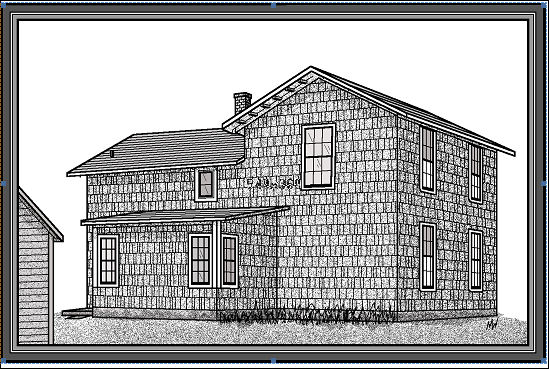
Family
Eyes blue, gray, brown of all shades, hazel, green, specks of all colors, shining softly, sometimes crying, reaching for other eyes to see and love, giving light back and forth dancing, one to another, seeing. Hair brown, auburn, soft blond, black, chestnut, strawberry, golden highlights, gray creeping in, mixing, changing with age, speaking of people long gone lingering in curls and soft waves, and prickly beards laughing. Fingers short, long, thick, thin, flying over keyboards, bringing color to paper songs, smoothing gifts of wood, touching near and far, pointing to each other feeling. Hearts showing, heaped full of love, wishing, dreaming of each other, filled with struggle and peace, different rhythms sounding in the morning and in the evening, sending hope as life for tomorrow's love song. Children, sisters, brothers, uncles, aunts, moms and dads, Grandmas and Grandpas, some even Great, celebrating the soft touch of small hands reaching out, pulling at hearts with sticky fingers and smiles big enough to get lost in. Eyes, hair, fingers, and heart part of us all and each of us smiling. - by MMCMullallyWocken, Sept. 9, 1997 |

 ChronologicalBy RelationshipFamily StoriesFamily PhotographsOrphan PhotographsFamily Recipes MapsContact UsResourcesFamily ForumWhat's New