Photographs from and commentary about
the Witch Fire, San Diego County, California
October 31, 2007
 On Sunday October 21st I received a phone call from my 1SG letting me know to bring a week's
(I ended up being on duty for 9 days) worth of clothes to work with me as I had been activated to
fight the fires in Southern California. These are the photographs I was able to snap while doing so.
We were assigned to the Witch fire in the San Diego area near Ramona and flew down to Gillespie Field
(just east of Santee) every day from Los Alamitos. On the busiest day we had 8 UH-60 Blackhawks
from two states, 3 CH-47 Chinooks from two states, 3 CH-46 Sea Knights, two CH-53 Sea
Stallions, and a multitude of civilian aircraft ranging from jet rangers to S-58s and a bastardized
Huey with a Chinook engine. On Sunday October 21st I received a phone call from my 1SG letting me know to bring a week's
(I ended up being on duty for 9 days) worth of clothes to work with me as I had been activated to
fight the fires in Southern California. These are the photographs I was able to snap while doing so.
We were assigned to the Witch fire in the San Diego area near Ramona and flew down to Gillespie Field
(just east of Santee) every day from Los Alamitos. On the busiest day we had 8 UH-60 Blackhawks
from two states, 3 CH-47 Chinooks from two states, 3 CH-46 Sea Knights, two CH-53 Sea
Stallions, and a multitude of civilian aircraft ranging from jet rangers to S-58s and a bastardized
Huey with a Chinook engine. |
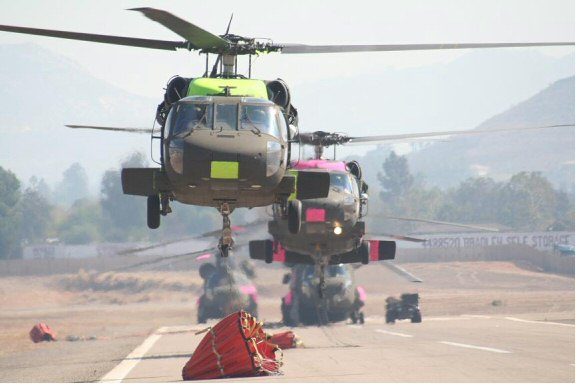
| Taking off from Gillespie Field in route to the FTA (fire
traffic area). We would spend the first day fighting flames along the front yards of homes and in people's
back yards. Dipping out of Lake Hodges and dropping our water amongst the homes on its northern shores
and the canyons immediately north of the lake. |
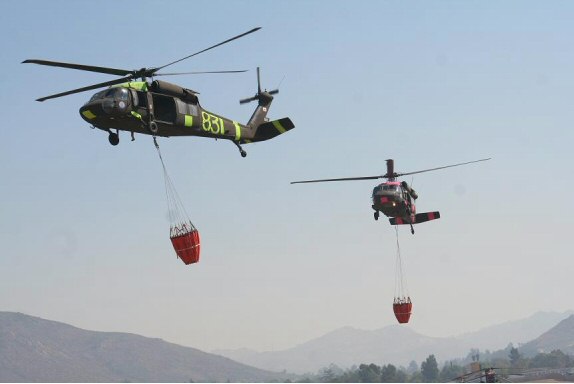
Flight of two UH-60 Blackhawks lifting off from Gillespie Field with 750 gallon buckets.
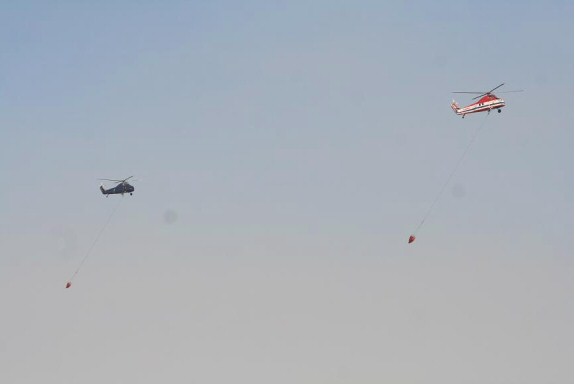
Two Sikorsky S-58s return from a day of dropping water.
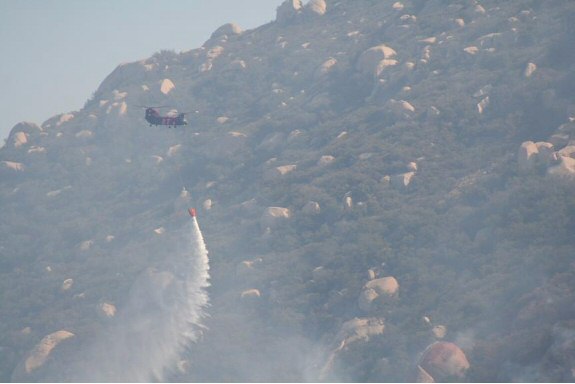
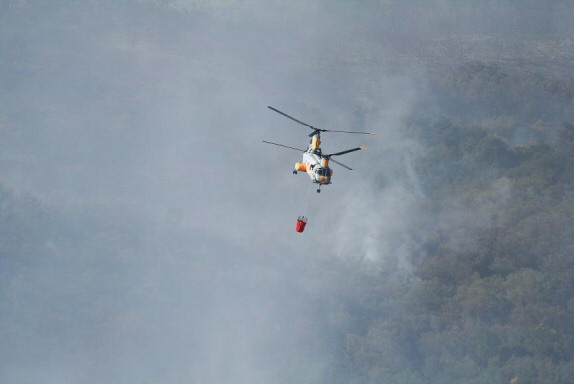
| A CH-47 Chinook from the Nevada National Guard swings 1700 gallons of water onto a fire
burning up Woodson Mountain. |
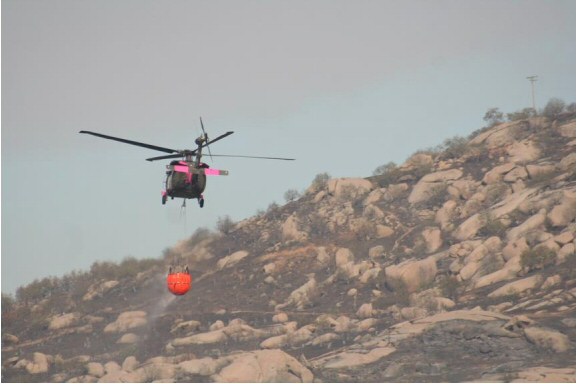
A UH-60 Blackhawk climbing out of Lake Poway with a full bucket.
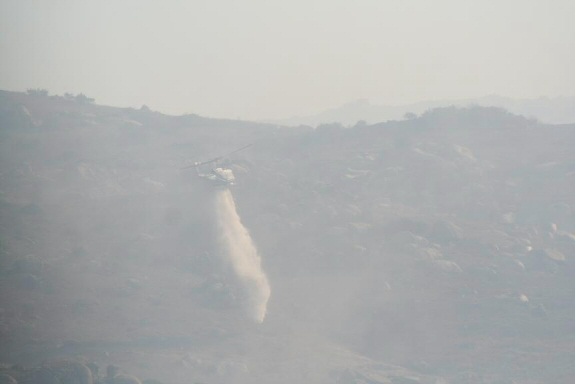
A civilian Huey drops water from a belly tank in poor visibility due to thick smoke.
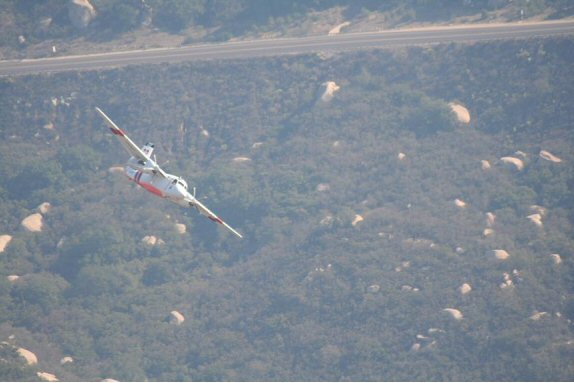
| As we were fighting the fire along the north side of
Woodson Mountain, S-2T air tankers from the California Department of Forestry (CDF) were getting lined
up for their drops on the south side of the mountain and would seemingly pass underneath us.
|
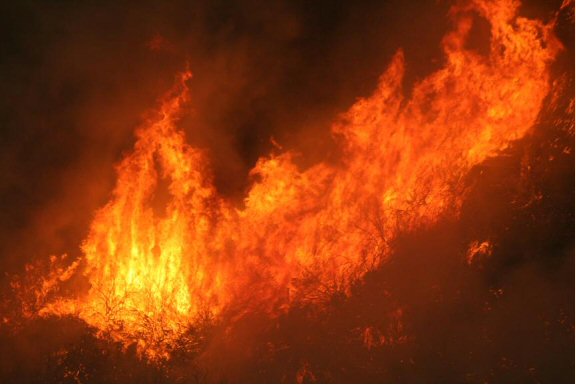
| Flames leaping from the brush. Normally I get as far
out my window as possible to get the best view of our line-up but flames like these make it impossible,
as the heat is too intense to be able to hang outside the aircraft. |
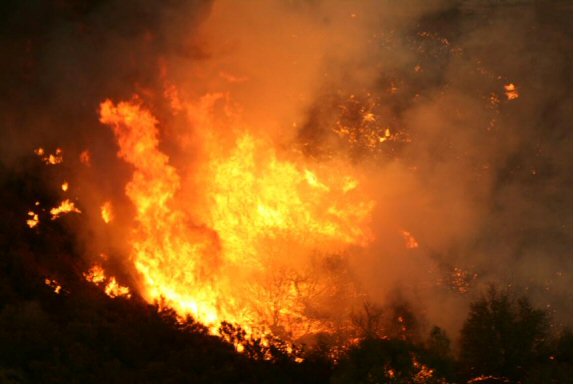
More intense flames.
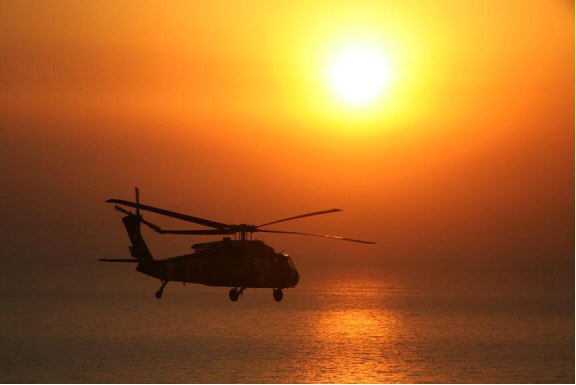
| Flying back to Los Alamitos along the Pacific Ocean.
The smoke from the fires made for spectacular sunsets every day. |
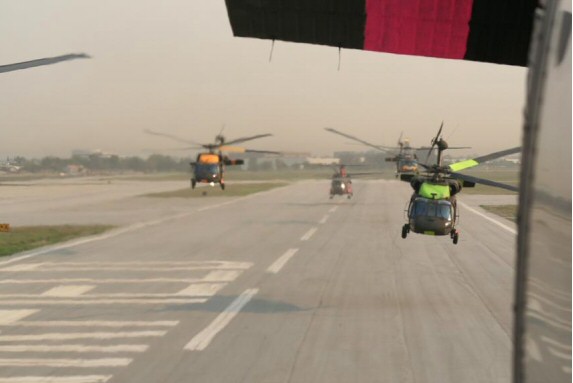
| Lifting off from runway 22R on the second day in a
flight of 5 UH-60’s and one CH-47. The bright paint is temporary and helps to make our
camouflaged aircraft easier to spot. |
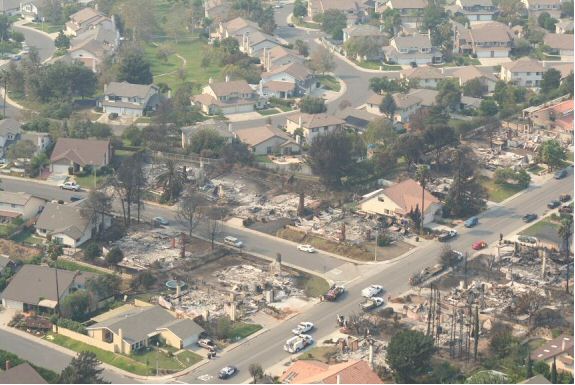
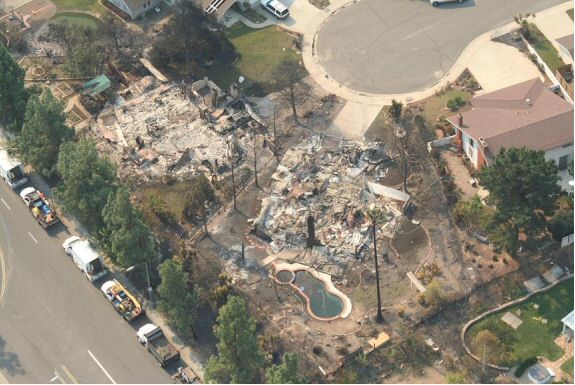
Flying over some heavily hit neighborhoods on the second day.
| Most of the houses consumed by the flames were reduced
to nothing but swimming pools, foundations and chimneys. |
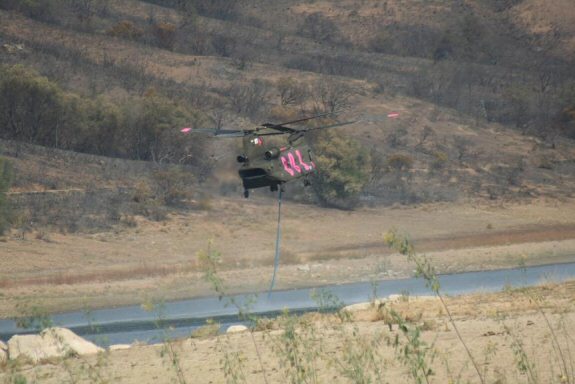
A CH-47 Chinook dips its bucket into Lake Sutherland.
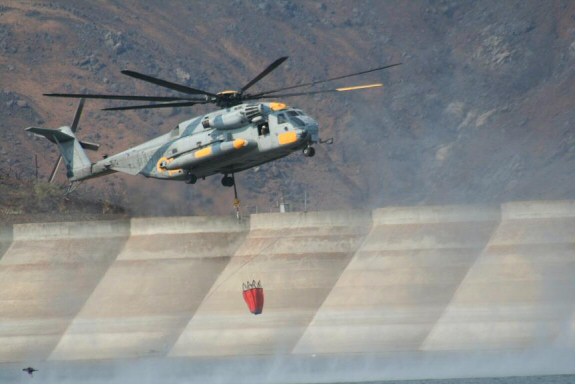
| A CH-53 Sea Stallion from the United States Marine
Corps out of Miramar, CA dips into Lake Sutherland. |
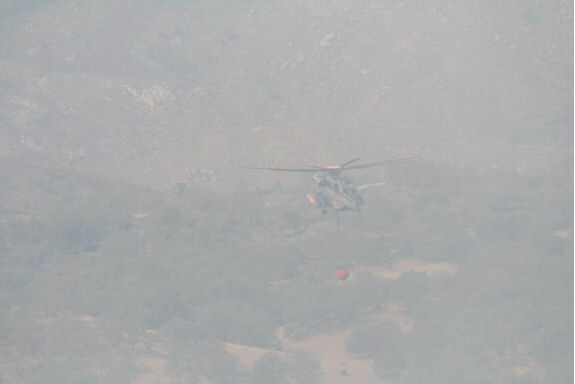
This CH-53 shows why bright paint is applied to the
military aircraft going into the FTA.
| Because the Marines helos don’t have the ability to
talk to the civilian ground crews, each craft had to be assigned a host National Guard helicopter to
fly with each day. We have a special radio installed that allows the use of specific civilian fire
fighting frequencies.
|
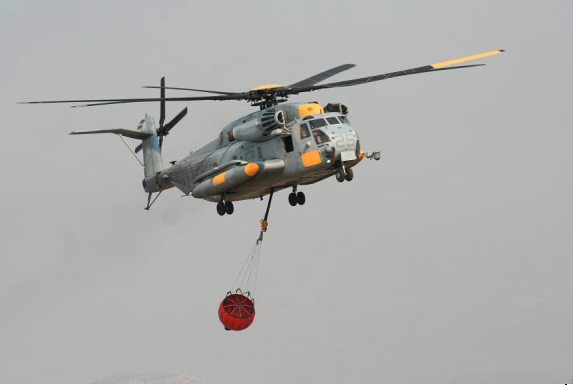
Flying back to Gillespie Field in formation with a Marine Corp CH-53 on our left side…
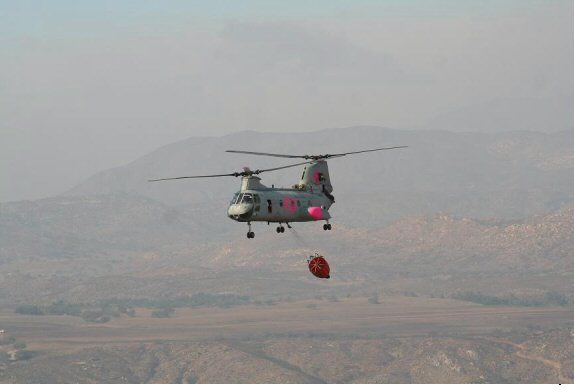
…and a Marine Corp CH-46 to our right! They weren’t too happy about the pink paint.
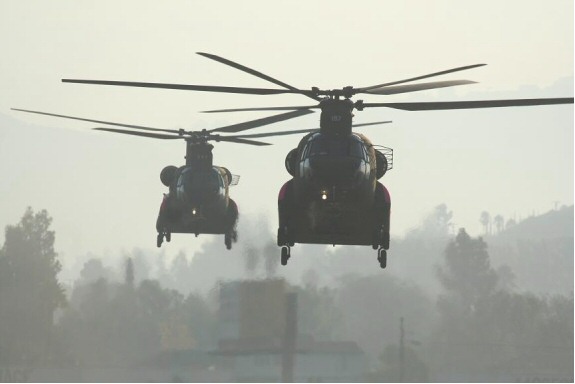
Showing up to work early in the morning. These two CH-47s are from Stockton, CA.
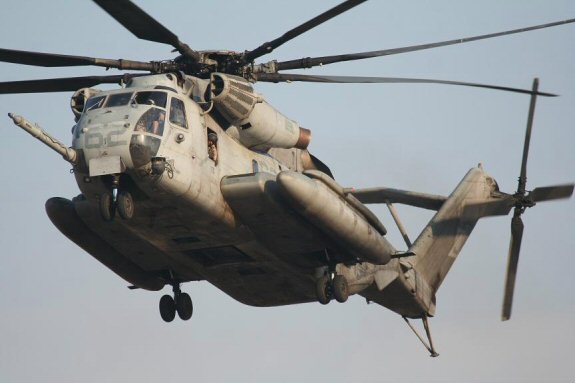
The CH-53 is the Marine Corps heavy lift helicopter and is a beast in the air.
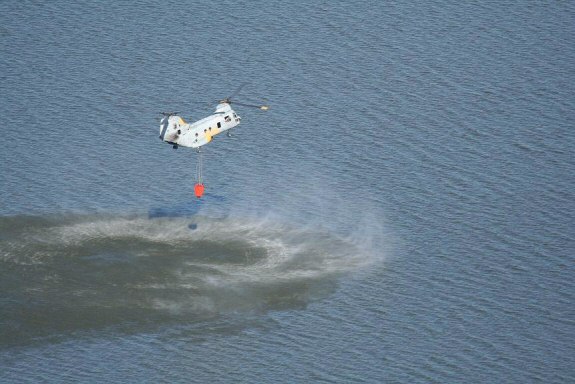
Dipping out of Lake Henshaw.
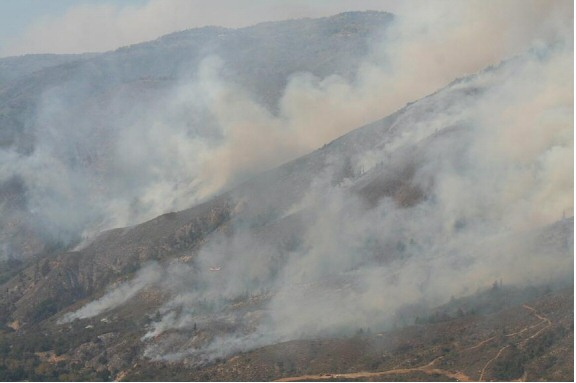
| Smoke rolls up the side of a hill near Hwy 76 west
of Lake Henshaw. Can you spot the S-58 amongst the smoke? |
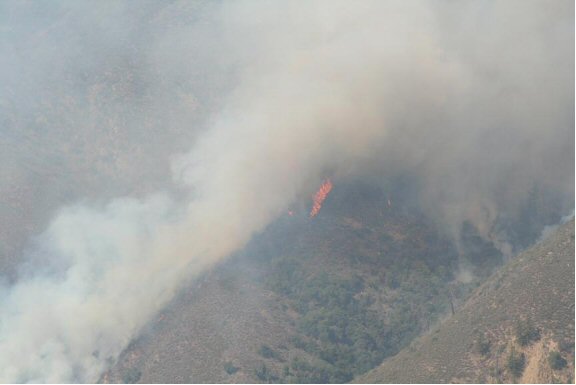
There’s fire under all that smoke!
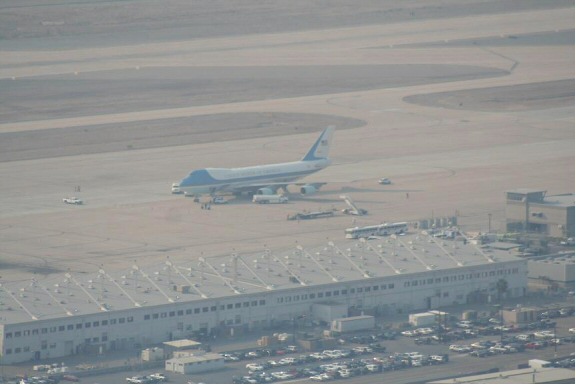
| This is Air Force One on the ground at Miramar Naval
Air Station. The president came out to visit the fires and view the devastation first hand. Hope he
got an eye full. |
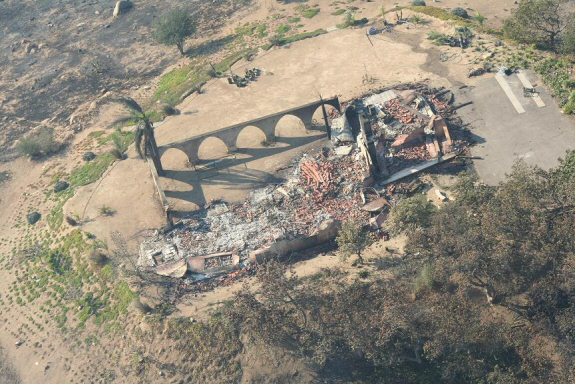
One of the hundreds of homes burnt down in the hills east of the San Diego area.
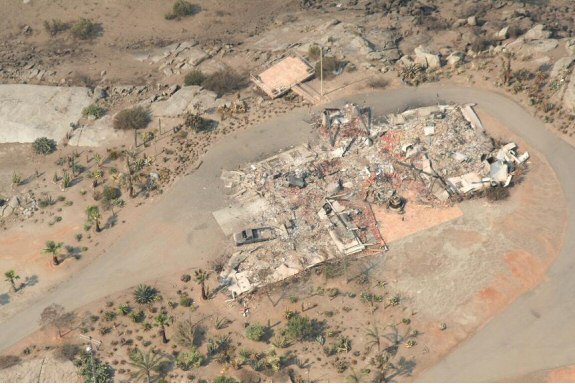
The heat from the fires seemingly melted this pickup truck right into the driveway.
| The crew of this CH-46 performs a “go-around” after
deciding they didn’t have the right line-up. This can be tricky when you have to reestablish yourself
safely into what we call the daisy chain (the line of helicopters that stretches from the dip site to
the drop site). |
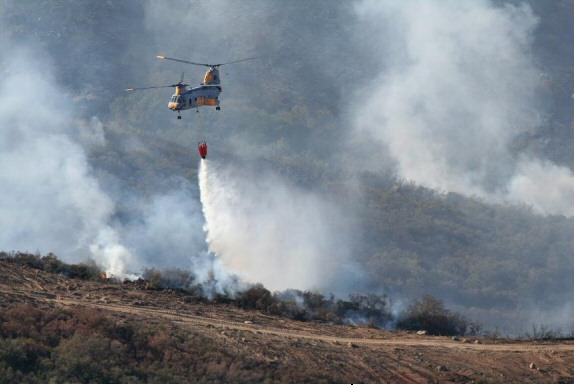
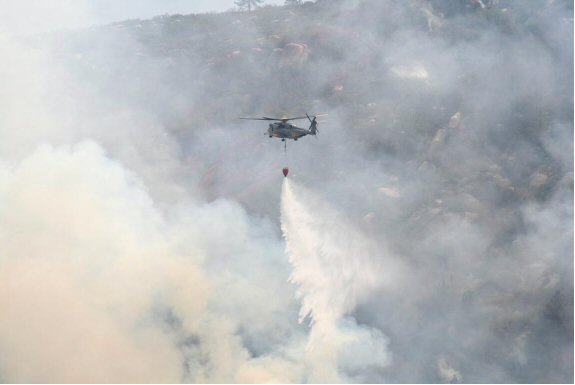
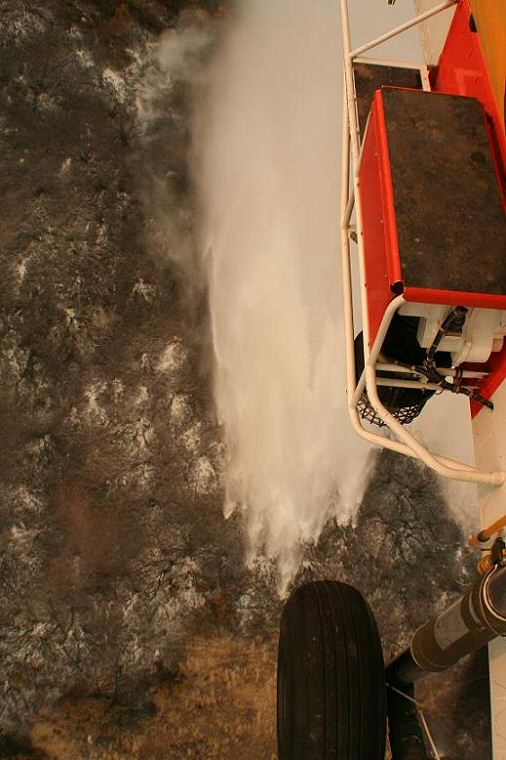
Getting the water right where the ground crews need it.
| The view from my seat as we make a drop from our
Firehawk, a UH-60L Blackhawk specially fitted with 1000 gallon belly tank used only for fire fighting
duties. |
All commentary and photographs by Michael Nobriga
Copyright © 2007
All rights reserved