|
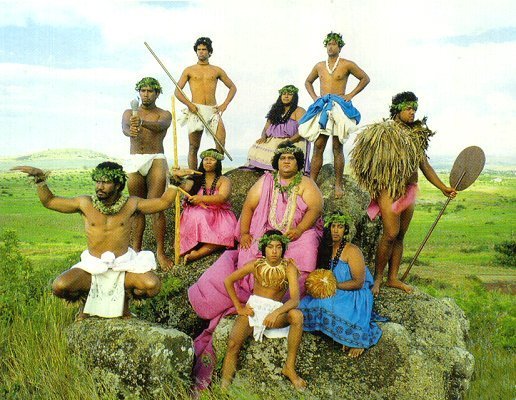
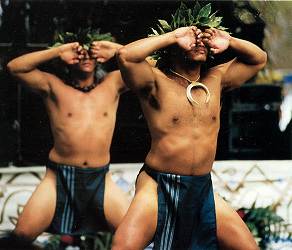
Today, in many Hawaiian shows, both male and female hula is
common. And to celebrate both the birthplace of the hula and the importance of this dance to Hawaiian
heritage and culture, an annual festival has been organized called Moloka'i Ka Hula Piko. Held
along the shores of Papohaku Beach Park each May, Moloka'i Ka Hula Piko is a celebration of the dance,
coupled with historic performances by halaus (dance troupes) and exhibits of various arts and crafts,
Hawaiian games, sporting contests and local entertainment.
The celebration begins solemnly in the dark before dawn at the
top of a mountain, Kaana. The haunting notes of the conch shell horn call the participants to meditation.
A subtle rustling of fabric and the whiff of ferns and maile vines brings focus back to the moment, as
dancers rise and begin to sway, chanting, "Aloha e, aloha e," their bodies silhouetted against
the stars.
Later in the day one can see hulas that haven't been danced
publicly in years, ones that must have struck mortal terror in the hearts of the early Christian missionaries:
the howling dog dance, the dance of the evil lizard, and the hula mai, in honor of royal fertility.
The one-day Moloka'i Ka Hula Piko is a less structured affair.
There is no competition here, but simply a joyous commemoration of this ancient and beautiful art form.
|

 otherworldly sources -- in this instance the goddess Laka, who is said to have first performed the hula on a Moloka'i
hill in ancient times. Each May, halau hula (dance troupes) from throughout the Islands gather to celebrate this
heritage at Moloka'i Ka Hula Piko -- literally "Moloka'i, the Center of the Dance."
otherworldly sources -- in this instance the goddess Laka, who is said to have first performed the hula on a Moloka'i
hill in ancient times. Each May, halau hula (dance troupes) from throughout the Islands gather to celebrate this
heritage at Moloka'i Ka Hula Piko -- literally "Moloka'i, the Center of the Dance."